
Breathable Tarps: Which Cover Lets Moisture Out?
Breathable tarps are woven covers, usually cotton canvas, that let water vapour pass through the fabric while shedding rain. Standard PE and PVC tarpaulins are coated on both sides, so they keep rain out and keep…
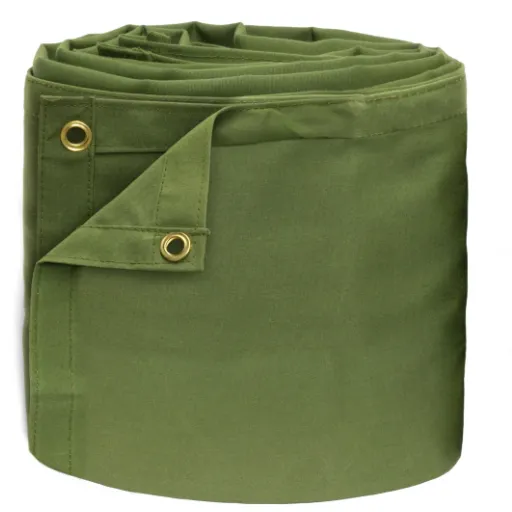
Breathable tarps are woven covers, usually cotton canvas, that let water vapour pass through the fabric while shedding rain. Standard PE and PVC tarpaulins are coated on both sides, so they keep rain out and keep moisture in. The right choice depends on which risk is greater: rain reaching the load, or condensation forming under the cover.
A wet underside is not proof of a leak. On a clear, cold night, a sealed tarp can be dry on top and dripping underneath.
If you have opened a cover and found the load damp under a sheet that never leaked, you are looking at condensation. This guide explains why it happens, which covers let vapour escape, and how to specify a breathable cover. We compare canvas, PE, PVC and mesh, give the weights and test methods to ask for, and show where a breathable cover is the wrong choice.
Key Takeaways
- Canvas is breathable but water-resistant, not waterproof. TONGYUAN supplies 12–18 oz/yd², roughly 410–610 GSM.
- Standard PE and PVC tarps are vapour barriers. They are the right choice when rain and standing water are the main risk.
- Proofing adds weight. Confirm base weight and finished weight, not just the label.
- Dry hay needs airflow. Large round bales are typically baled at about 18% moisture; baleage needs sealed film, not a breathable tarp.
- Specify oz/yd² and GSM, proofing, eyelet spacing, hem, test method, and a sample before you ask for a price.
What Makes Breathable Tarps Different?
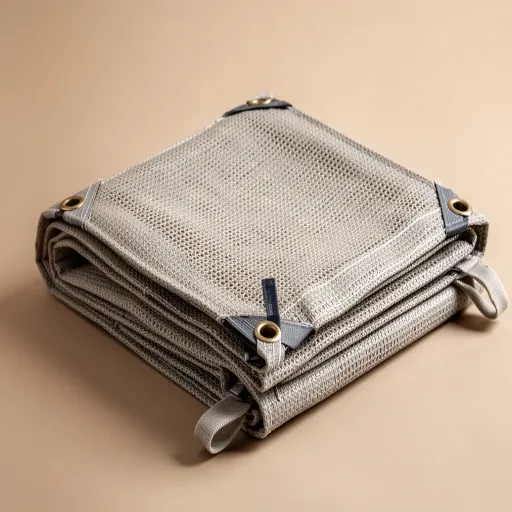
Breathability is a property of the fabric structure. A woven canvas has spaces between the yarns. Water vapour passes through those spaces. A PE or PVC tarpaulin has a continuous coating on both sides, so the spaces are closed.
PE tarpaulin is a woven HDPE base with LDPE coating on both sides. PVC tarpaulin is a polyester scrim coated with PVC. The coating is what makes the sheet waterproof. The same coating is what stops vapour from passing through.
Canvas is different. The cotton duck is woven, then proofed with wax or paraffin, which adds water resistance and weight but doesn’t seal the weave the way a PE or PVC coating does.
The fabric still moves vapour, which is why a canvas cover reduces condensation rather than trapping it.
| Cover | Structure | Vapour passes? | Rain protection |
|---|---|---|---|
| Cotton canvas | Woven cotton, proofed | Yes | Water-resistant |
| PE tarpaulin | Woven HDPE, LDPE coated both sides | No | Waterproof as a sheet |
| PVC tarpaulin | Polyester scrim, PVC coated | No | Waterproof as a sheet |
| Woven mesh | Open weave | Yes, with airflow | Limited |
That difference is the whole argument for breathable tarps: the cover has to let vapour out without letting rain in.
Woven structure vs coated structure
Breathability is measured as moisture vapour transmission rate (MVTR), usually in g/m²/24h, or as resistance to evaporative heat transfer (RET). A higher MVTR means more vapour passes through the fabric.
We don’t publish a single MVTR figure that applies across our canvas range, because the result depends on fabric weight, proofing, and construction. If your specification needs a number, state the test method with your enquiry and ask for a sample and test report.
For a broader comparison of the materials, see our .
What breathability does not mean
Breathable does not mean waterproof. A breathable cover can still soak through under pooling water or an unsealed seam. It also doesn’t mean the load stays cool in summer or warm in winter by itself. Airflow, shade, and the gap between the cover and the load matter too.
Some waterproof breathable tarps use a laminated fabric with a membrane. That is a different product category.
Our current range covers PE, PVC and cotton canvas, not membrane-laminated fabrics; if you need a membrane product, specify it separately and ask for the test data.
Consider a timber yard in northern Europe. A yard manager covers sawn timber with a sealed blue PE sheet. The sheet is intact. After a cold night, the underside is wet and the top layer of boards is damp.
The cause isn’t a hole. Warm, moist air from the timber and the ground rises, meets the cold underside of the sheet, and condenses. The cover has done what a vapour barrier does.
Switching to a breathable canvas top cover, held above the stack with an air gap and open sides, changes the moisture path. The boards dry, and the cover still sheds rain.
Breathable Canvas Tarp: Water-Resistant, Not Waterproof
Canvas is the breathable option in our range. It is a woven cotton duck, supplied from 12 to 18 oz/yd², roughly 410 to 610 GSM. The fabric is proofed with wax or paraffin as standard.
The proofing adds water resistance. It isn’t a waterproof seal.
Canvas lets moisture vapour pass through, so condensation does not collect underneath. That’s why canvas is used for timber, machinery, and other loads that sweat under a sealed cover.
Canvas is water-resistant, not waterproof. It sheds light rain but soaks through under pooling water or an unsealed seam. If you need a fully waterproof cover with welded seams, PVC is the correct material. We will say that plainly rather than sell you a canvas cover for a job that needs a sealed sheet.
Base weight vs finished weight
Canvas weight is often quoted after proofing. Proofing adds weight. A 50% difference between the base fabric weight and the finished weight is common.
A product sold as 18 oz may be a 12 oz base plus 6 oz of proofing. That isn’t necessarily dishonest, but it is ambiguous.
Specify both figures on the order: base weight and finished weight, in oz/yd² and GSM. Ask for a batch test report. If a supplier quotes only one number, ask which one it is.
The conversion is simple. One ounce per square yard is about 34 GSM. A 12 oz base is roughly 410 GSM. An 18 oz finished weight is roughly 610 GSM.
Where canvas stops
Canvas has three limits. First, standing water. A pool on a canvas cover will eventually soak through.
Second, seams and eyelets. An unsealed seam or a poorly reinforced eyelet is a leak point.
Third, storage. A cover packed away damp will rot. Mildew-proofing is standard for export covers, and UV stabilisation is available, but neither replaces dry storage.
Company-reported outdoor life for a TONGYUAN canvas cover is three to seven years. Sustained UV and damp storage are the main factors that shorten it. Heavier canvas is not automatically better; it is harder to handle and slower to dry.
See the full , or before you commit to a container.
Why PE and PVC Tarps Trap Moisture
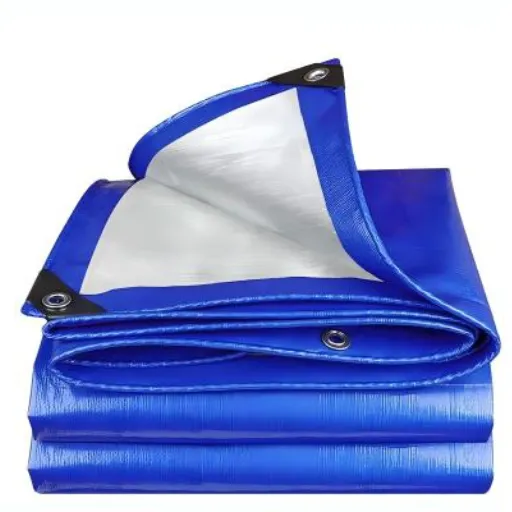
PE and PVC are sealed covers. That’s their advantage and their limitation, and it is why they are not breathable tarps.
PE tarpaulin is a woven HDPE base with LDPE coating on both sides, from 60 to 300 GSM. PVC tarpaulin is a polyester scrim coated with PVC. Both are specified by GSM.
Both are waterproof as a sheet because the coating closes the weave. The same coating stops water vapour from escaping.
That isn’t a defect. A sealed cover is the right choice when the load must stay dry, when rain is driven horizontally, or when the cover is exposed to standing water. The problem starts when a sealed cover is used on a load that releases moisture.
The condensation cycle under a sealed cover
At night, the air under the cover cools. Cool air holds less water vapour. When the air reaches its dew point, vapour condenses on the coldest surface, which is usually the underside of the sheet. The water then drips onto the load.
Diagnose before you change the cover. Check the seams, eyelets, and low spots where water pools, then compare what you see with the table below.
| What you see | Likely cause | What to do |
|---|---|---|
| Water runs from a seam or eyelet | Leak at a fixing point | Repair or reseal the seam |
| Uniform wet underside after a clear, cold night | Condensation | Add an air gap, open the sides, use a breathable cover |
| Damp patch under a sagging area | Pooling water | Re-tension the cover or add a ridge |
Ventilation helps. An air gap between the cover and the load, open sides, and a ridge that sheds water rather than sagging all reduce condensation. A breathable cover helps more, because it lets vapour leave the space instead of trapping it.
<!– IMAGE: Condensation droplets on the underside of a sealed PE tarp above a timber stack. –>
When a sealed cover is the right choice
Use PE or PVC when the priority is keeping liquid water out:
- Dry cargo on a truck or trailer
- Baleage and silage, which need sealed film and anaerobic conditions
- Temporary rain protection over a load that is already dry
- Covers exposed to standing water, driven rain, or repeated washing
- Applications that need welded seams and a measurable hydrostatic head
Use canvas when the priority is letting vapour out: timber, hay, machinery, and other loads that release moisture or sweat under a sealed cover.
For the material-level comparison, see .
Matching Breathable Tarps to the Job
The material name is the second decision. The first is what the cover has to do. Breathable tarps are not one product; the job decides the construction. Use this table to narrow the choice before you look at prices.
| Application | Recommended cover | Why | What to specify |
|---|---|---|---|
| Dry hay, round or square bales | Canvas top cover, open sides | Sheds rain while letting vapour escape | 12–18 oz/yd², mildew proofing, eyelet spacing |
| Baleage and silage | Sealed silage film, not a breathable tarp | Needs anaerobic conditions | Film gauge, wrap layers, handling method |
| Firewood | Canvas top cover, open sides | Seasoning needs airflow | Weight, eyelets, overhang |
| Sawn timber | Canvas top cover with an air gap | Reduces condensation on the boards | 15–18 oz/yd², air gap, open sides |
| Machinery and equipment | Canvas cover with ventilation | Reduces condensation and rust risk | Weight, eyelets, air gap |
| Dry cargo | PE or PVC | Keeps liquid water out | GSM, seam type, eyelet reinforcement |
| Tents and awnings | Canvas or PVC | Breathability vs waterproofing | Weight, proofing, UV treatment |
| Shade and privacy | Woven mesh | Airflow, not rain protection | Openness, shade rate, edge reinforcement |
Hay and forage
Hay is the application where the breathable argument is easiest to see. Large round bales are typically baled at about 18% moisture, small rectangular bales at 20%, and large rectangular bales at 17% ().
Hay baled too wet will heat and mould. A breathable cover helps manage surface moisture, but it can’t rescue hay that was baled wet.
Dry hay needs airflow, and breathable hay tarps work as a top cover, not as a sealed bale wrap. A sealed tarp over a stack traps moisture that the bales are still releasing. A canvas top cover that sheds rain while leaving the sides open is the practical compromise.
Baleage is different. It needs sealed film and anaerobic conditions. Don’t use a breathable tarp for baleage. Use the correct silage film and wrapping system.
Picture a hay supplier in a humid region. The bales are dry at baling, but a sealed tarp is pulled tight over the stack. Two weeks later, the top layer of bales has mould.
The tarp didn’t leak. Moisture from the bales and the ground condensed on the underside and ran back into the stack. The fix isn’t a tighter cover. It’s a breathable top cover, open sides, and better drying before baling.
Firewood and timber
Seasoning is the whole point with firewood. Cover the top, leave the sides open. A sealed tarp over the whole stack traps moisture and encourages mould. A breathable canvas top cover sheds rain while allowing vapour to escape.
For timber, the same principle applies. Stickers between boards, an air gap under the cover, and open sides matter as much as the fabric. A breathable cover isn’t a substitute for airflow.
Machinery, equipment and tents
Condensation under a sealed cover can rust machined surfaces, electricals, and stored tools. A canvas cover with an air gap reduces the risk. The cover still has to be secured, and the space still needs ventilation.
Tents and awnings are a similar trade-off. Breathable canvas reduces condensation inside the tent. PVC is chosen where waterproofing, welded seams, and wipe-clean surfaces matter more. Neither is right for every site.
Woven Mesh and Shade Cloth: Airflow Without Rain Protection
Woven mesh is an open fabric. It provides airflow, shade, and privacy. It doesn’t shed rain like a solid cover. Breathable tarps are not the same product; if rain protection is the requirement, mesh alone is not enough.
Knitted shade cloth is a different product. It is rated by shade percentage, not by waterproofing or breathability in the canvas sense. It is a separate supply chain. We mention it so you don’t confuse the two.
Our current range covers PE, PVC and cotton canvas. We explain mesh here for selection, not as a TONGYUAN product. If you need mesh or shade cloth, specify the openness, shade rate, UV stabilisation, and edge reinforcement with your supplier.
How to Specify Breathable Tarps
Use this checklist before you ask for a price. Breathable tarps are specified by the job, not by the label. The same questions apply to canvas and to any other breathable cover you compare.
| Specification | What to state | Why it matters |
|---|---|---|
| Material | Cotton duck, polycotton, or another woven fabric | Fibre content drives breathability, weight, and water resistance |
| Weight | oz/yd² and GSM | The same cover can be quoted in two units; state both |
| Base vs finished weight | Both figures | Proofing can add around 50% to the base weight |
| Proofing | Wax/paraffin, mildew, UV | Treatments change water resistance, lifespan, and price |
| Eyelets | Type, spacing, reinforcement | Fixing points are where many covers fail first |
| Hem and corners | Rope-reinforced hem, corner patches, stitching | Load is concentrated at edges and corners |
| Finished dimensions | Length, width, overhang | A cover that is 200 mm short is scrap |
| Test report | Batch report, tensile and tear methods | Gives you a number to compare, not just a description |
| Sample | Hand, weight, colour, proofing | Confirms the specification before bulk |
| Packing and port | FOB Qingdao or Shanghai, CIF or DDP | Landed cost depends on the trade term |
Ask for a batch test report. Tensile and tear tests can reference methods such as for coated fabrics and for tensile properties.
Our quality control runs through 26 stages, from incoming material to pre-shipment inspection. BV or SGS inspection can be arranged on request.
For weight selection, see our . For care and storage, see . Both matter as much as the material choice.
Consider a distributor who orders “18 oz canvas” for a retail programme. The supplier quotes a price.
Before production, the factory asks whether 18 oz is the base weight or the finished weight. The answer changes the fabric specification, the price, and the finished cover weight. The buyer confirms both figures, adds them to the purchase order, and asks for a batch test report.
The order ships without a short-weight dispute.
FAQ
What is a breathable tarp?
A breathable tarp is a woven cover that lets water vapour pass through the fabric while shedding rain. Cotton canvas is the common example. Standard PE and PVC tarps are coated and do not breathe.
Are canvas tarps breathable?
Yes. Canvas is a woven cotton fabric, and moisture vapour can pass between the yarns. Proofing adds water resistance but does not seal the weave like a PE or PVC coating. Canvas is water-resistant, not waterproof.
Is a breathable tarp waterproof?
Usually not. Breathable canvas is water-resistant.
It sheds light rain but can soak through under pooling water or an unsealed seam. If you need a waterproof cover with welded seams, use PVC. A waterproof and breathable membrane fabric is a different product category.
What are breathable tarps made of?
Most are cotton canvas, polycotton, or another woven fabric. Some specialist fabrics use a membrane. Check the fibre content, weight, proofing, and test method, not just the word “breathable”.
Will a breathable tarp stop rain completely?
No. A breathable tarp sheds rain, but it isn’t a sealed barrier. It is the right choice when condensation is the bigger risk; if rain and standing water are the main risk, use a sealed PE or PVC cover.
Do breathable tarps stop mould?
They reduce the risk by letting vapour escape, but they don’t sterilise a load. Mould needs moisture, warmth, and time. Dry the load before covering, leave airflow, and store the cover dry. A canvas cover packed away damp will rot.
What is the most breathable tarp material?
An open woven fabric with minimal coating, such as untreated canvas or woven mesh, lets the most air through. Mesh has the most airflow but little rain protection. Canvas is the practical balance for rain protection with vapour escape.
How do you stop condensation under a tarp?
First diagnose the source. If water runs from a seam or eyelet, fix the leak. If the underside is uniformly wet after a cold night, the cause is condensation. Add an air gap, open the sides, avoid sagging low spots, and use a breathable cover where the load releases moisture.
Conclusion
Breathable tarps solve a specific problem: moisture that forms under a sealed cover. They don’t solve every covering problem. Canvas is breathable and water-resistant; PE and PVC are waterproof and trap vapour. The right choice starts with the load, not the material name.
The decision rule is simple. If condensation is the risk, choose canvas. If rain and standing water are the risk, choose PE or PVC.
If the load must stay sealed, don’t use a breathable tarp. Then specify base and finished weight, proofing, eyelets, hem, test method, and a sample.
Send the intended use, dimensions, oz/yd² or GSM, proofing, eyelet spacing, quantity, and destination port. We will recommend a specification, send a sample, and quote FOB Qingdao or Shanghai. when your specification is ready.