
Waterproof Breathable Tarp: What the Label Can Deliver
A waterproof breathable tarp is a measured trade-off, not a fabric category. The two words describe opposite jobs on the same sheet. The number that settles the argument is a test result, not an adjective on…
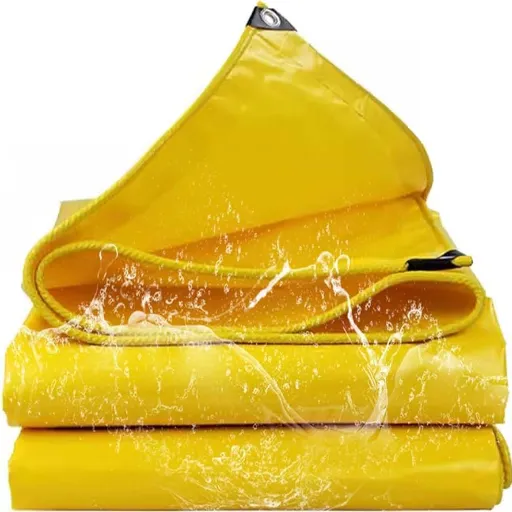
A waterproof breathable tarp is a measured trade-off, not a fabric category. The two words describe opposite jobs on the same sheet. The number that settles the argument is a test result, not an adjective on a listing.
Here is where buyers get caught. A purchasing manager orders covers described as “waterproof breathable canvas”. Rain pools at a seam, the load goes damp, and the return claim fails.
Neither side defined “waterproof”. Neither side asked for a test method.
This article defines the three claims in measurable terms, names the standards behind them, then gives the specification to put in front of a supplier. It covers canvas, coated polyester and membrane laminates, and says where PE and PVC are the honest answer.
Key Takeaways
- “Waterproof breathable” is a compromise, not a single property: the coating that stops liquid water also slows vapour.
- Hydrostatic head is tested to ISO 811 or ASTM D751 and reported in millimetres or pascals of water column.
- Vapour transmission is tested to ASTM E96 (WVTR) or ISO 11092 (Ret in m²·Pa/W). Those two methods are not interchangeable.
- Proofed cotton canvas is the breathable option in the TONGYUAN range, at 12-18 oz/yd², roughly 410-610 GSM. It is water-resistant, not waterproof.
- Seams, eyelets and contact points leak before the sheet does, so specify finishing alongside fabric.
If you already know the load and the climate, . We’ll check the specification before you price the job.
What Does “Waterproof Breathable Tarp” Actually Mean?
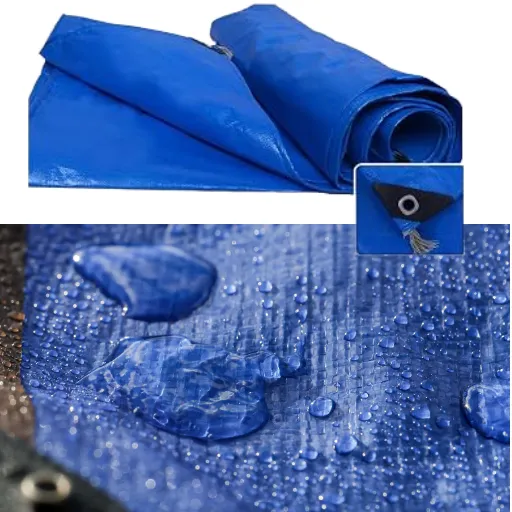
Three different claims sit inside that phrase. Each one has its own test.
Water-resistant means the fabric resists rain for a period and lets some vapour through. Standing water will eventually wet it out.
Waterproof means liquid water does not pass through the sheet under the condition tested, and most coated tarpaulins meet that at sheet level.
Breathable means water vapour can move through the fabric. It says nothing about rain.
A weatherproof jacket can be all three because it carries a membrane engineered for both. A coated tarpaulin cannot, because the coating that blocks liquid water also blocks vapour.
The explains the mechanism; this page is about measuring and specifying it.
| Claim | What it resists | Measured as | Test method |
|---|---|---|---|
| Water-resistant | Rain for a limited time | Hydrostatic head, or spray rating | ISO 811; ASTM D751 hydrostatic |
| Waterproof | Liquid water at a stated pressure | Hydrostatic head | ISO 811; ASTM D751 |
| Breathable | Nothing; it describes vapour flow | WVTR in g/m²/24h, or Ret in m²·Pa/W | ASTM E96; ISO 11092 |
One sheet, two jobs
A PE tarpaulin is a woven HDPE base with LDPE coating on both sides. The coating closes the weave, which is why the sheet holds water.
Vapour needs a path. A closed coating removes it. That is why a fully waterproof PE sheet traps moisture under a load that is releasing any.
A proofed canvas works the other way. The cotton duck is woven and then treated with wax or paraffin. The treatment sheds light rain without sealing the weave, so vapour still moves. The sheet is breathable and water-resistant, not waterproof.
This is why most listings that call themselves waterproof breathable tarps describe one of those two positions. Either you get a coated sheet that is waterproof, or a proofed fabric that breathes. Neither one does the other’s job.
Buyers type it in every word order, from breathable tarp waterproof to waterproof breathable tarps. It is one query and one trade-off.
How Is a Waterproof Breathable Tarp Tested?
A supplier who quotes a number without a method has given you half a specification. These are the tests to ask for by name.
Hydrostatic head: ISO 811 and ASTM D751
specifies a hydrostatic pressure method for measuring a fabric’s resistance to water penetration. It applies to any fabric intended to be water-resistant, whether or not it carries a finish.
Water pressure rises on one face until it penetrates at three points. The pressure at the third penetration is the result, usually reported in millimetres or centimetres of water column.
covers coated fabrics and names tarpaulins in its scope. Its hydrostatic resistance section offers two procedures: a Mullen-type tester and a rising water column.
Ask for the figure with the method. “Waterproof” alone is not a result. A hydrostatic head of 800 mm and 8,000 mm are different products for different jobs.
One caution. Rating bands such as “showerproof” or “fully waterproof” are commercial convention, not part of ISO 811. Compare numbers from the same method. Never compare labels from different factories.
Water vapour transmission: ASTM E96 and ISO 11092
gives gravimetric methods for water vapour transmission rate (WVTR). Two procedures are used: a desiccant (dry cup) method and a water (wet cup) method.
The standard is explicit here: the two methods do not give interchangeable results. Test conditions must be reported with the figure. So a WVTR number is only comparable against another number from the same method and the same conditions.
measures water-vapour resistance, called Ret, on a sweating guarded hotplate. Ret is the vapour pressure difference across the fabric divided by the evaporative heat flux, in m²·Pa/W.
The direction matters, and readers get it backwards. Lower Ret means less resistance to vapour, so more breathability. A lower number is the better result.
The standard also sets a ceiling: around 700 m²·Pa/W for minimum-specification equipment. A figure at that limit means the fabric is close to a vapour barrier.
Seams, eyelets and contact points: the leak path the fabric test misses
A hydrostatic test measures a flat specimen. Your cover is not flat. It has seams, eyelets and folds.
Water concentrates at contact points. One inch of standing water exerts about 0.036 psi. Held for days, it works through a proofing layer, which is why leaks appear over equipment corners, lumber edges and ladder rungs rather than mid-panel.
TONGYUAN publishes by duty. Spacing runs 30-45 cm in high wind, 45-60 cm for general duty, and up to 1 m for sheltered light duty.
Eyelets sit at least 15 mm from the edge. A rope-reinforced hem spreads load along the edge instead of concentrating it at each eyelet.
If you want the full specification before you commit to a container, . An A4 swatch plus the batch figures settles more than a data sheet.
Which Materials Come Closest to “Waterproof Breathable”?
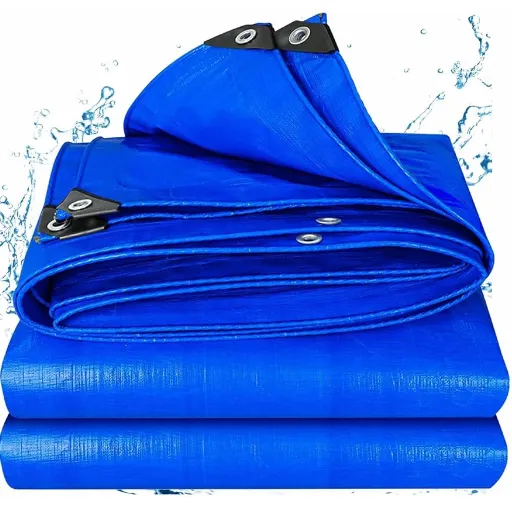
Four options exist, and only three are genuinely candidates for both words. In the trade, breathable waterproof fabric usually means the third, the membrane laminate.
| Material | Water resistance | Vapour transmission | Where it fits |
|---|---|---|---|
| Proofed cotton canvas | Water-resistant; wets out under pooling | Good | Hay, timber, machinery, condensation control |
| Silicone-coated polyester | Waterproof, dependent on coating weight | Moderate, needs a figure | Technical covers, lighter weight |
| Membrane laminate | Waterproof to a stated head | Highest | Garments, engineered technical covers |
| PE or PVC sheet | Waterproof | None | Dry cargo, baleage, standing water |
Proofed cotton canvas
This is the traditional answer and the breathable option in the TONGYUAN range. We supply woven cotton duck from 12 to 18 oz/yd², roughly 410-610 GSM, proofed with wax or paraffin as standard. If you are searching for a breathable canvas tarp, this is the product that phrase should point to.
Canvas moves vapour, so condensation does not collect under it the way it does under a sealed sheet. It sheds light rain, and soaks through under pooling water or at an unsealed seam.
Two specification traps apply. Many covers sold as “18 oz” are a 12 oz base that gains weight during proofing. A 50% gap between base and finished weight is common, so always confirm which figure is quoted.
Duck numbering is not standardised either. Specify oz/yd² and GSM, and ask for the batch report.
Company-reported outdoor life for a TONGYUAN canvas cover is three to seven years in normal service. The full lists the weights and typical uses.
Silicone-coated polyester
A silicone coating on a polyester base can shed water and still let vapour pass. It is not continuous the way an LDPE or PVC coating is, so the fabric keeps a vapour path.
Treat the claim with the same test: hydrostatic head and WVTR or Ret, each with its method. Many listings use “silicone coated” as a marketing signal without publishing either number.
Membrane laminates
This category delivers both, by one of two mechanisms.
A microporous membrane has pores smaller than a water droplet but far larger than a vapour molecule. Liquid stays out. Vapour passes.
A hydrophilic monolithic membrane has no pores at all. It absorbs vapour on one face, diffuses it through the polymer, and releases it on the other.
Both cost more. Both are built for garments and technical covers, and both need care. Microporous pores can clog, and hydrophilic films swell under prolonged water contact.
TONGYUAN does not manufacture membrane-laminated fabric. Our range covers PE, PVC and cotton canvas. If your specification needs a membrane product, name the test method and ask for the report. We’ll tell you plainly that it sits outside our lines rather than sell you a canvas cover as a substitute.
PE and PVC: waterproof, not breathable
Woven HDPE with LDPE coating on both sides runs 60-300 GSM in our range. PVC on a polyester scrim starts around 300 GSM and runs through 650 GSM into heavier industrial grades. Both are waterproof as a sheet. Neither is breathable.
That is the correct choice for dry cargo, loads exposed to standing water, and baleage. It is the wrong choice for a load releasing moisture. The covers the material decision; here the point is that neither bridges the gap.
Match a Waterproof Breathable Tarp to the Load
| Load | Primary risk | Specification that fits |
|---|---|---|
| Hay and straw | Condensation, mould | Breathable cover with open sides, 12-18 oz/yd² canvas or breathable hay tarp |
| Baleage and silage | Oxygen ingress | Sealed film; a breathable tarp is the wrong product |
| Firewood | Rain on top, trapped vapour | Breathable top cover only, sides open |
| Machinery | Condensation on cold metal | Proofed canvas with an air gap, UV-stabilised |
| Timber and lumber | Surface staining, mould | Breathable top cover; 15 oz/yd² and up for abrasion |
| Dry cargo on a trailer | Rain and road spray | Waterproof PE or PVC; breathability is not wanted |
| Tents and events | Rain, flame standard | PVC to a named flame standard; breathability secondary |
Consider a farm equipment dealer in Saskatchewan who covered a combine header with a sealed 200 GSM PE sheet for the winter. The sheet stayed intact, and in March the paint under it was bloomed with condensation. Proofed canvas held clear of the metal changed the moisture path without changing the rain protection.
A note on baleage
A contractor who specifies “waterproof breathable” for wrapped silage bales is buying the wrong product. We’d say so before taking the order. Baleage needs an oxygen barrier and anaerobic conditions. A breathable tarp lets vapour out, which is the opposite of what is needed.
That example is illustrative. The principle is not: match the cover to the moisture direction, not to a phrase on a purchase order.
What to Ask a Supplier Before You Approve a Sample
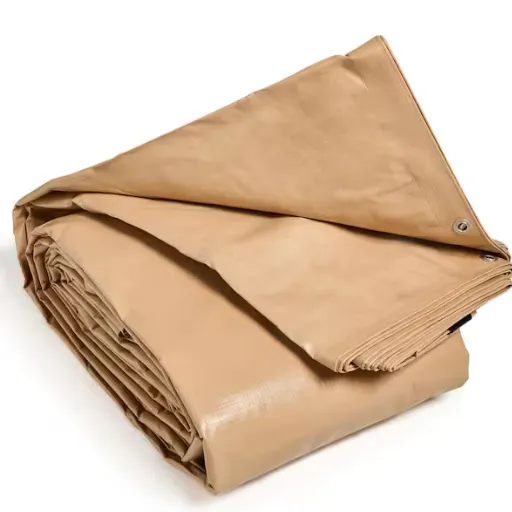
Put these on the enquiry. A supplier who answers all of them is quoting a product; one who answers two is quoting a hope.
- Base weight and finished weight, in oz/yd² and GSM, stated separately.
- Hydrostatic head, with the test method (ISO 811, or ASTM D751 Procedure A or B).
- WVTR or Ret, with the method (ASTM E96 desiccant or water; ISO 11092) and the conditions.
- Seam type (welded, sewn, or both) and the seam strength figure.
- Eyelet material (aluminium, brass, stainless), spacing by duty, and edge offset.
- Treatments applied: UV stabilisation, anti-mildew, flame retardant to a named standard. Ask for accelerated-weathering figures rather than adjectives. Our page lists the standards we work to.
- A batch test report and an A4 sample before production.
The sample is the part buyers skip and later regret. Fabric hand, colour, coating weight and eyelet quality are visible in a swatch and invisible in a PDF.
FAQ
What is a waterproof breathable tarp?
It resists liquid water while allowing water vapour to pass. In practice that means a proofed woven fabric such as cotton canvas, a silicone-coated fabric, or a membrane laminate. No single coated PE or PVC sheet does both.
Is a waterproof tarp breathable?
Generally no. A standard PE or PVC tarpaulin has a continuous coating that blocks liquid water and vapour together. Some coated fabrics are engineered for vapour flow, but the claim needs a WVTR or Ret figure.
What is the difference between water-resistant and waterproof?
Water-resistant resists rain for a period and can wet out under standing water. Waterproof resists liquid water at a stated pressure. The comparable number is hydrostatic head, tested to ISO 811 or ASTM D751, reported with its method.
Are canvas tarps waterproof?
Treated canvas is highly water-resistant, not waterproof. It sheds rain, and it can soak through under pooling water or at an unsealed seam. If you need a sealed barrier with welded seams, specify PVC.
What is the most breathable tarp material?
Woven mesh is the most open and offers the least rain protection. Among covers that still shed rain, proofed cotton canvas and silicone-coated polyester are the breathable options. Membrane laminates reach the highest vapour transmission at the highest cost.
Do breathable tarps stop mould?
They reduce condensation, which is one cause of mould. They do not stop mould on a load that is already wet, and they do not replace dry storage. A cover that kills airflow will mould a damp load whatever the fabric.
What is the best tarp for rain?
A waterproof PE or PVC sheet, because holding rain out is what a sealed coating does best. If the load also releases moisture, use a waterproof cover with an air gap and open sides. Where light rain is the main exposure, a breathable cover works.
Conclusion
The phrase “waterproof breathable tarp” is a brief for a compromise, and the compromise is measurable. Hydrostatic head tells you what the sheet resists. WVTR or Ret tells you how fast vapour leaves. Seam and eyelet detail tells you where it leaks first.
So a waterproof breathable tarp is not a single product you buy by name. Get those three answered with methods attached. The choice between canvas, coated polyester, a membrane laminate or a plain PE sheet then becomes arithmetic rather than argument.
If the load is hay, timber or machinery and condensation is the problem, canvas is our recommendation. If it is dry cargo or baleage, a sealed PE or PVC sheet is the correct answer, and we’ll say so.
Tell us the load, the dimensions, the climate and what the waterproof breathable tarp on your enquiry will cover. We’ll confirm the specification before you order. and we’ll reply within one business day.