

How We Build a Case Study
Most suppliers publish a case study that names nobody, specifies nothing and reports a feeling. We would rather publish three that can be checked than thirty that cannot.
| Field | What it means | Evidence | Client consent | Why it matters |
|---|---|---|---|---|
| 01 Client | Named or described | Named with written permission, or described by industry and country | Required | A grain distributor in Brazil carries weight without naming the client |
| 02 The requirement | In the client’s own terms | Written brief or recorded call | Required | Stops us from describing the problem we wish they had |
| 03 The specification | Material, GSM, dimensions, finishing | Verifiable against production records | Required | Lets a reader check the case against their own requirement |
| 04 What was difficult | The constraint or deviation | Project notes or client confirmation | Required | Shows where the specification had to be adjusted, and why |
| 05 The outcome | Reported and evidenced | Client report where possible; batch or test records where not | Required | Separates a measured result from a favourable impression |
All Five Fields, or It Does Not Publish
A case that omits the specification is a story. A case that omits the difficulty is marketing. A case that omits the outcome is an anecdote. All five fields are required before a project appears on this page.
How an Order Actually Runs
This is the part of a project that can be described without anyone’s permission, because it is about our own process.
Inquiry and Specification
You send the application, the surface to be covered, the expected service life and the destination port. We come back with a material recommendation, a GSM, a finishing specification and a landed-cost estimate.
Sampling
Free samples, freight at your account, so the hand and the finish can be checked before anything is committed. Sample production runs three to five days.
Drawing Approval
Dimensions, D-rings, eyelets, hem construction, colour and printing go on one document both sides sign. Finished size is agreed here, not measured on arrival.
Production
Fifteen to twenty-five days for standard orders, longer for UV-stabilised or custom-printed grades. In-line thickness monitoring runs throughout lamination.
Then inspection, packing and dispatch. Spot GSM checks every 500 metres with calibrated gauges, then laboratory batch testing on finished material. Packing follows your specification, and documents include commercial invoice, packing list, B/L, certificate of origin and test reports.
Projects by Industry
Once cases are published they will be grouped here, with links to the matching application page.
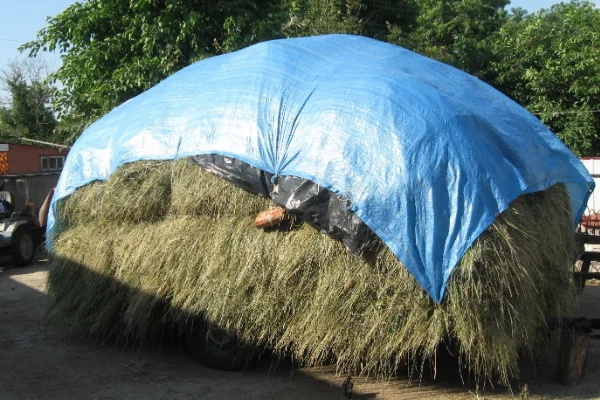
Agriculture
Grain, hay, silage and livestock covers — matched to agricultural tarpaulin solutions for seasonal and long-term storage.
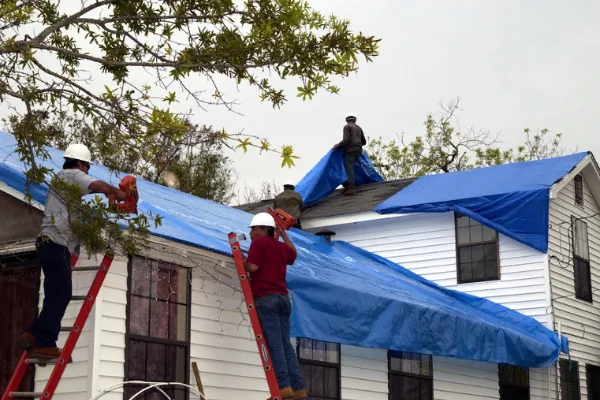
Construction
Scaffolding enclosure and materials protection — specified against site conditions, wind exposure and flame-retardant requirements.
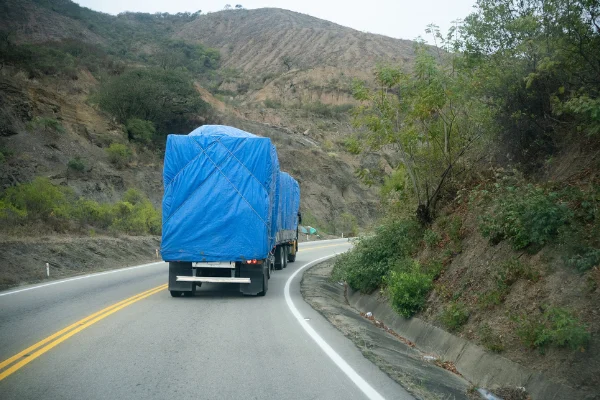
Transport & Logistics
Fleet covers and curtainsider fabric — built for daily routes, repeated handling and secure anti-flap fixing on the road.
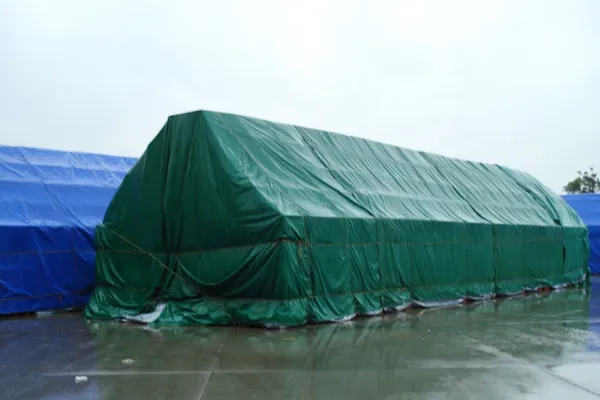
Industrial & Storage
Machinery, steel and raw-material covers — matched to industrial covers for abrasion, chemical and long-term exposure.
CASE STUDY FEEDBACK
What Clients Say About Our Case Studies
★★★★★
“The case study named our industry and country without exposing our company. That balance let us approve publication while keeping the specification verifiable.”
★★★★★
“Having the difficult part written down — not just the result — made the case credible to our own engineering team. It read like a project record, not a sales page.”
★★★★★
“The batch test records attached to the case matched the material we received. Being able to check the GSM against production data removed all doubt for us.”
★★★★★
“We were offered a direct reference call during the enquiry, not after the order. That is unusual, and it told us the case study was backed by a real project.”
★★★★★
“The specification in the case study listed material, GSM, dimensions and finishing in one block. Our incoming inspection simply worked from that same list.”
★★★★★
“Anonymised but true is exactly what we needed. The case described a distributor in our region and still carried enough detail to be useful to our buyers.”
★★★★★
“The outcome section reported what actually happened, including the constraint that changed the specification. That honesty made the rest of the case believable.”
★★★★★
“Before publishing, they asked us to confirm every technical figure. No other supplier has ever sent us a case study for approval with that level of detail.”
★★★★★
“The case study we approved still reads well a year later. It describes the requirement, the grade supplied and the result, without any exaggerated claims.”
Swipe or drag to explore
01 / 09
CLIENT REFERENCES ON REQUEST
Ask Us for a Reference
If you need to speak to an existing customer before placing an order, ask. We will arrange it at the point where you are close to a specification, because that is when a reference conversation is actually useful to both sides. We will not publish our customers’ contact details on a web page for anyone to harvest.
START A REFERENCE REQUEST
Discuss a Similar Project
Request a Reference Call
Comparable project · Honest answer · No harvested contacts