

Industrial Tarpaulin — Covers or Curtains?
Most buyers arrive at this page with one facility problem, and the first question is which product solves it. The material is often the same PVC-coated polyester — the difference is what the panel has to do.
COVER
Fitted Panel
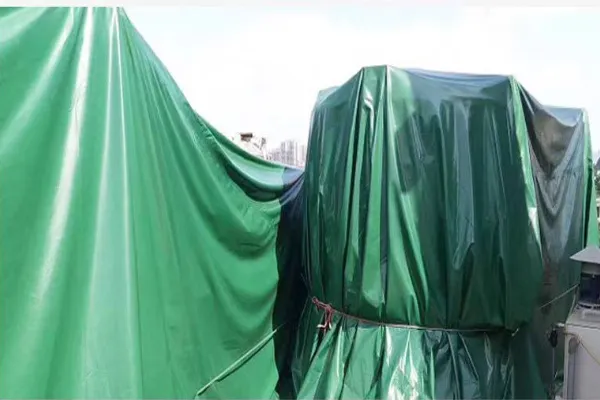
Protects something that does not move often — a machine, a generator, a stored component, a conveyor.
CURTAIN
Hung Panel
Separates, screens or encloses — a warehouse bay, a cold room opening, a welding station, a dock area.
Specified Differently, Built Differently
A cover is cut to the equipment’s dimensions, finished with eyelets or webbing, and left in place. A curtain is built to open and close, so it carries different finishing — roller hems, weighted bottoms, clear windows.
Tell us your application and we will tell you which line fits it.
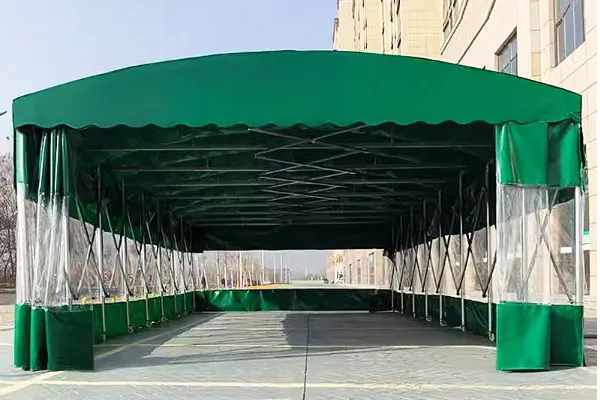
Which GSM for Which Industrial Job?
Match the grade to the environment, not to the product name.
| Application | Recommended GSM | Typical Thickness | Treatment |
|---|---|---|---|
| 01 Indoor dust containment | 400–500 | ~0.35–0.4 mm | None beyond sealing |
| 02 Warehouse partition | 500–650 | ~0.4–0.5 mm | UV where lit |
| 03 Outdoor equipment cover | 650–800 | ~0.5–0.6 mm | UV stabilised |
| 04 Heavy-duty, long-term, large machinery | 800–1,000+ | ~0.6–1.0 mm | UV + FR where specified |
Confirm Against the Batch Test Report
Figures are indicative ranges for the category. Industrial PVC is typically supplied in widths up to about 5.1 m, in thicknesses from roughly 0.2 mm to 1.2 mm, with a working temperature range around −30 °C to +70 °C. Finishing — eyelet spacing, webbing hem, corner reinforcement, heat-welded seams, weighted bottoms — is produced to your drawing.
Covers vs Curtains — and Where Each One Belongs
Choose by what the panel has to do, then by material.
FITTED PROTECTION
450–900 GSM
Industrial Cover
A fitted, opaque panel for machinery, equipment and stored components. Cut to the equipment’s dimensions, finished with eyelets or webbing, and left in place.
- Product Line
- PVC-coated polyester, opaque — see the PVC tarpaulin range.
- Built For
- Generators, pumps, compressors, conveyors and stored parts.
- Finishing
- Eyelets or webbing, corner reinforcement, heat-welded seams.
- Grade Logic
- Rises with outdoor exposure and long-term handling.
HUNG PARTITION
400–900 GSM
Partition Curtain
A hung or rolled panel that separates, screens or encloses. Built to open and close, so it carries different finishing from a fixed cover.
- Product Line
- Opaque or clear PVC-coated fabric, hung or rolled.
- Built For
- Warehouse bays, cold room openings, welding stations, docks.
- Finishing
- Roller hems, weighted bottoms, clear windows.
- Grade Logic
- Set by temperature separation, dust load and spark exposure.
If the open question is which GSM to specify, the decision belongs on the heavy-duty selection page, where GSM, tensile and tear strength are compared like for like.
Heavy-Duty Tarpaulin SelectionSix Facility Problems, One Product Family
Covers and curtains solve different problems in the same building. Most industrial work falls into these six jobs.
Warehouse Partitioning
A flexible alternative to a permanent wall, dividing a space without construction.
Dust Containment
Barriers that hold particulate inside a process area or keep it out of a clean one.
Temperature Separation
Curtains that hold cold air in a freezer opening or separate a hot zone from a cold one.
Equipment & Machinery Covers
Fitted protection for generators, pumps, compressors, conveyors and stored parts.
Welding Bays & Screens
Spark and UV containment around a welding station, with flame-retardant PVC where a test report supports it.
Temporary Enclosures
Maintenance staging, project screening and seasonal door covers — put up, taken down, reused.
Tell us the facility problem. Name what the panel has to do — contain dust, hold temperature, stop sparks, or survive weather — and we will route you to the product line and the grade.
Tell Us Your ApplicationTwo Treatments Carry the Industrial Load
Both are specified, not assumed. Ask for the treatment level and the test data behind the grade you are buying.
UV Stabilisation
SpecifiedMatters on any cover or curtain exposed to sun through glass or outdoors. It is a treatment we apply; it is not an inherent property of PVC, and it is what stops a clear panel from yellowing and an opaque one from surface cracking.
Flame Retardancy
Test-ReportedMatters where site regulation or insurance requires it. We supply flame-retardant grades only where a test report supports the claim — typically tested to a standard such as NFPA 701 for curtains and drapery.
We do not describe any product as fireproof, and a tarpaulin curtain is not a fire-rated permanent wall. Where a site needs certified fire separation, that is a different structure and we will say so.
Flame-retardant PVC is available where a test report supports it. We state the test method and the grade rather than describing the curtain as “fireproof”.
Special Treatments — What Is TestedFour Cases Cover Most Industrial Work
The environment decides the grade more than the product name does.
Dust Containment
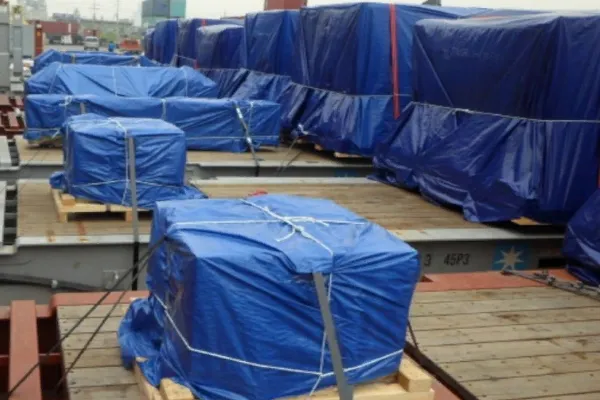
Dust barriers need opacity and a good edge seal more than they need heavy weight. A 400–500 GSM opaque curtain with a welded seam and a sealed floor edge keeps particulate where it belongs, without paying for tear resistance the job never uses.
Temperature Separation & Cold Storage
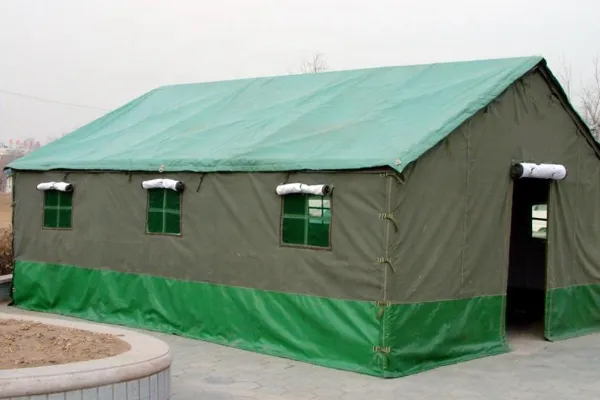
A cold-room curtain has to hold a temperature gradient across a doorway. Specify a heavier, fully opaque grade with high-frequency welded seams, because an air gap at a stitched seam is a leak. Tinted or blockout PVC is the usual choice where light and heat must stay out.
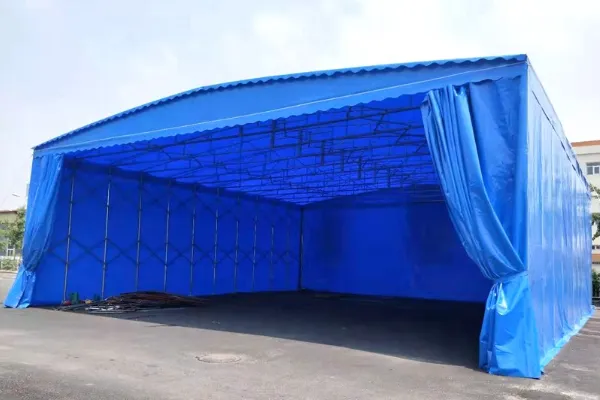
Welding Bays & Spark Protection
Welding screens carry a specific safety requirement. Flame-retardant PVC is available where a test report supports it — we state the test method and the grade rather than describing the curtain as “fireproof”.
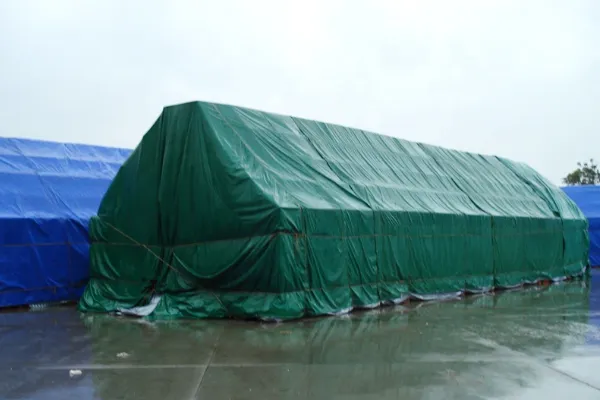
Outdoor Weather & Long-Term Storage
Covers left outside for years take UV and abrasion as well as rain. Specify 650–900 GSM PVC with UV stabilisation, and put the reinforcement where the cover flexes and rubs — corners, eyelets and hem. For lighter seasonal protection, a PE cover is often the more economical choice.
Manufacturing and Quality Control
Industrial tarpaulins are produced across our two bases in Linyi and Jiangsu — approximately 120,000 m² of manufacturing area, four main production lines and six finished-product processing lines, with a combined monthly capacity of about 2,000 metric tons. Our documented 26-stage quality control system covers materials, production and final inspection.
-
Incoming Material
Check raw materials before production.
-
In-Line Production
Monitor specifications during manufacturing.
-
Pre-Shipment Inspection
Verify finished goods before dispatch.
- GSM
- Tensile Strength
- UV Performance
- Dimensional Accuracy
PVC fabric is coated using German knife-coating technology and joined by high-frequency welding; PE fabric is woven and laminated in house. Batch reports reference named methods such as ASTM D751 and ISO 13934-1. BV or SGS inspection is available on request.
Owned Production. Verifiable Capacity.
See the facilities behind your order.
- Production Bases
- 2
- Factory Area
- ~120,000 m²
- Main Lines
- 4
- Finishing Lines
- 6
- Monthly Output
- ~2,000 metric tons
CUSTOMER FEEDBACK
What Our Customers Say
★★★★★
“The warehouse partition curtains were made to our bay dimensions. Welded seams and weighted bottoms matched the drawing exactly.”
★★★★★
“We specified dust containment curtains for our process area. The edge sealing and opaque grade held particulate where it should.”
★★★★★
“Cold room curtains arrived with the grade and treatment we agreed. High-frequency welded seams gave a clean, leak-free finish.”
★★★★★
“The welding bay screens carried the flame-retardant test report we asked for. Test method and grade were stated clearly, not glossed over.”
★★★★★
“Outdoor equipment covers in 750 GSM with UV stabilisation have handled two winters. Corner reinforcement is where it should be.”
★★★★★
“Clear PVC visibility panels and opaque covers came from the same factory. One contact for both lines simplified our sourcing.”
★★★★★
“Order details, packing and shipping documents were organized. Having one contact for covers and curtains simplified our import process.”
★★★★★
“The recommended grade suited our temporary enclosure job. Dimensions and finishing options were confirmed before production started.”
★★★★★
“Colour and packaging requirements for our partition range were handled clearly. The sample process helped finalise the specification.”
Swipe or drag to explore
01 / 09
FAQ
Frequently Asked
Frequently Asked
Questions About
Industrial Tarpaulin
Find answers about covers versus curtains, GSM selection, partition curtains and flame retardancy.
Have Another Question?Share your application and specifications with our export team.
What is an industrial tarpaulin?
An industrial tarpaulin is either a fitted cover for equipment and machinery, or a hung curtain for partitioning and enclosure. Both are usually PVC-coated polyester, specified by GSM, thickness and treatment to match the environment.
What GSM industrial tarpaulin do I need for equipment?
Indoor dust protection runs 400–500 GSM; general outdoor covering 650–800 GSM; heavy-duty long-term and large machinery 800–1,000 GSM and above. Match the grade to exposure and handling, and confirm against the batch test report.
What is a PVC partition curtain?
A PVC partition curtain is a hung or rolled panel that divides a warehouse, separates temperature zones, contains dust or screens a work area — a flexible alternative to a permanent wall, made from opaque or clear PVC-coated fabric.
Are industrial curtains flame retardant?
They can be, where a test report supports it. We supply flame-retardant grades tested to standards such as NFPA 701, and we state the test method rather than describing any product as fireproof.
What is the difference between a tarpaulin curtain and a strip curtain?
A tarpaulin curtain is a full, hung panel of PVC-coated fabric — for partitioning, dust control and enclosures. A PVC strip curtain is a row of overlapping flexible strips, typically for doorways and cold rooms. They are different products for different openings.
Which product line do I need — a cover or a curtain?
If the panel protects something that stays in place, it is a cover. If it has to open, close, separate or enclose, it is a curtain. Start from the environment — dust, temperature, spark or weather — and the product line follows.
START FROM THE ENVIRONMENT
Specifying Your Industrial Tarpaulin
Start from the environment, not the product name. Name what the panel has to do — contain dust, hold temperature, stop sparks, or survive weather — and the GSM, material and treatment follow.
Tell us the application, the dimensions, the environment and the destination port. We will recommend the product line and the grade, and send a sample so you can check the fabric before you commit.
START YOUR ENQUIRY
Tell Us Your Application
Request a Free Sample
Product line recommendation · Grade selection · Sample plan