
PE vs PVC Tarpaulin: Which Material Do You Need?
Choose PE tarpaulin for covers you will use for roughly 18 months: seasonal agriculture, general yard storage, light handling. Choose PVC tarpaulin for covers that must last 3 years or more in daily, abrasive, or cold…
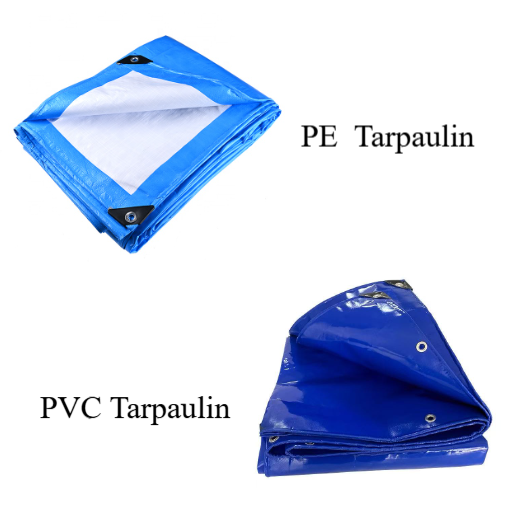
Choose PE tarpaulin for covers you will use for roughly 18 months: seasonal agriculture, general yard storage, light handling. Choose PVC tarpaulin for covers that must last 3 years or more in daily, abrasive, or cold conditions. In between those two points, the arithmetic on cost-per-year decides. Here is how to make that call without paying for durability you will never use.
Consider a fleet manager in Rotterdam who covers 40 trailers for daily food-and-feed hauls. She specs 200 GSM PE for the price. Eighteen months on, the covers are cracking at the fold lines under constant sun and highway flap, and she is re-ordering. Had she done the maths first, a 650 GSM PVC cover at three times the unit price but five times the life would have won on cost-per-year. The material that is cheaper on the invoice was the more expensive decision.
You are probably working the same problem from the other end. Your current supplier pushes one material, and you want to know what the other one actually gives you. By the end of this page, you will be able to read the two specifications side by side, pick the material that fits your job, and ask a supplier the three questions that expose a weak quote.
What Is the Difference Between PE and PVC Tarpaulin?
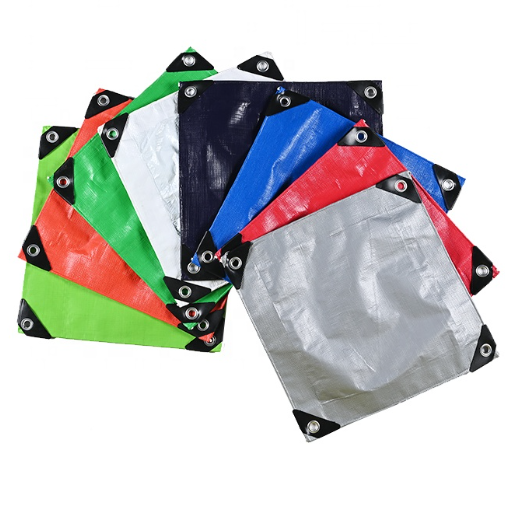
The two materials are built differently, and that structure is what drives cost, weight, and service life.
PE Tarpaulin
PE tarpaulin is a woven HDPE (high-density polyethylene) base fabric with LDPE (low-density polyethylene) coating on both sides. The weave carries the tensile strength. The coating carries the waterproofing.
The GSM figure describes the combined weight of fabric and coating per square metre. Our range runs from 60 to 300 GSM, split into light-duty (60–100 GSM), medium-duty (120–180 GSM) and heavy-duty (200–300 GSM). Tensile strength rises with GSM: about 400 N/5cm at 120 GSM, climbing toward 650 N/5cm at 180 GSM in company testing. Higher grades also carry more UV stabiliser, and that matters more than weight for life in direct sun.
PVC Tarpaulin
PVC tarpaulin is a polyester scrim, a woven reinforcing mesh, coated with polyvinyl chloride. The scrim carries the load. The PVC supplies the performance surface.
We produce PVC tarpaulin using German knife-coating technology and lamination. Knife coating lays down a controlled, even coating weight, which is what keeps GSM consistent from roll to roll. Our PVC range starts around 300 GSM and rises through 650 GSM into heavier industrial grades. The scrim and the coating weight together set abrasion resistance, tear strength, and how the fabric behaves under repeated folding on a truck cover.
PE vs PVC Tarpaulin: Side-by-Side Comparison
| Property | PE Tarpaulin | PVC Tarpaulin |
|---|---|---|
| Structure | HDPE woven scrim, LDPE coated | Polyester scrim, knife-coated PVC |
| GSM range | 60–300 GSM | 300 GSM upward |
| Typical tensile | ~400 N/5cm at 120 GSM, ~650 N/5cm at 180–200 GSM | Quoted by grade, higher tear resistance |
| Outdoor life | One season to several years | 2 to 10+ years |
| Cost | Lower per m², higher cost-per-year over long use | Higher per m², lower cost-per-year over long use |
| Cold behaviour | Stiffens and cracks in hard frost | Cold grades stay flexible well below freezing |
| Seams | Sewn or heat-sealed | High-frequency welded |
| Best for | Seasonal, temporary, budget-led covers | Long-term, high-abrasion, industrial work |
The tensile figures above are company-reported and indicative. They vary with weave construction, so confirm against the batch test report for the grade you are buying.
See the full PE tarpaulin range, 60–300 GSM, and the PVC tarpaulin range, 300 GSM upward for the specification detail behind each column.
Which Material Lasts Longer? Service Life and the Break-Even Point
This is the question buyers actually mean when they ask which material is better. The honest answer is that PVC lasts longer, but that only matters if the job runs long enough to use that extra life.
Company-reported outdoor service life runs from one season to several years for PE, against 2 to 10+ years for PVC by grade. Two qualifications matter more than those headline numbers. First, UV exposure drives the difference. A PE tarp in a shaded yard will outlast a PVC tarp on a truck roof in full sun. The stabiliser package matters as much as the polymer. Second, handling drives it too. A cover dragged over rough concrete, or folded across the same line every day, fails at that line regardless of material.
So the useful measure is cost-per-year, not cost-per-square-metre. PVC costs roughly two to four times PE per square metre, but it commonly lasts three to five times longer outdoors. That means the break-even sits around 18 to 30 months of continuous use.
Take a grain and hay distributor in Mombasa who buys covers for seasonal use only. His covers sit in direct sun for four months a year and are replaced every two seasons. For him, 180 GSM UV-stabilised PE is the right call. PVC’s longer life would go to waste on a cover stored most of the year, and he would be paying for durability he never uses. The same logic, run the other way, is why a permanent-structure buyer in Northern Europe specs cold-grade PVC.
The rule to hold onto: under 18 months, PE usually wins on price. Over 3 years, PVC usually wins on total cost. In between, do the replacement arithmetic before you order.
PE vs PVC by Application
| Application | Recommended Material | Typical Grade |
|---|---|---|
| Truck and cargo covering, occasional use | PE | 200–300 GSM |
| Truck covers, daily use on exposed routes | PVC | 450–650 GSM |
| Grain, hay and silage storage | PE | 150–250 GSM |
| Construction scaffolding and enclosure | PE or PVC | 200–300 GSM / 450–650 GSM |
| Tents, marquees and awnings | PVC | 500–650 GSM |
| Equipment and machinery covers | PE or PVC | 200–250 GSM / 450–500 GSM |
| Architectural membrane and permanent structures | PVC | 650 GSM and above |
The deciding factor is usually handling frequency, not the material name. A cover that goes on and off a truck twice a day for five years needs PVC. A cover for occasional or seasonal use is better served by PE, which costs less per unit and is lighter for one person to handle. For daily flatbed duty, see the truck tarpaulin page; for farm covers, see agricultural tarpaulin solutions.
Seams, Welding and Repairs: The Detail That Decides
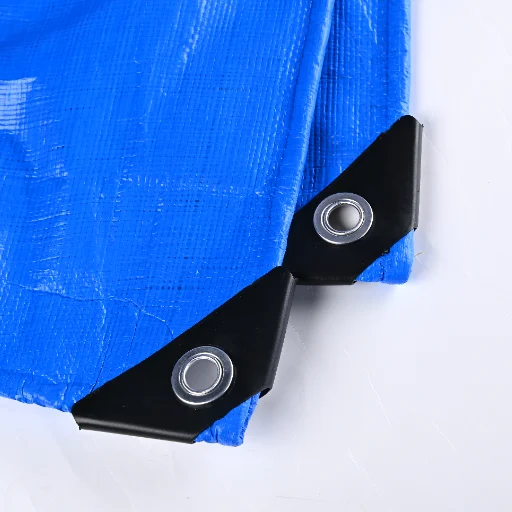
Most tarpaulins do not wear out. They fail at a specific point, and where that point sits depends on the material.
PVC tarpaulin is joined by high-frequency welding, which fuses the material rather than stitching it. The seam becomes structurally continuous with the fabric, so it is not automatically the weak point. PE tarpaulin is typically hemmed and sewn, with eyelets set through a reinforced hem. That means the fixing points and the seam are where a PE cover fails first, which is why rope-reinforced hems and corner reinforcement matter so much on PE.
This carries straight into repair. Adhesives and welding methods are not interchangeable between PE and PVC. A PVC weld patch will not bond to a coated PE tarpaulin. Keep stock of the correct repair material for each, or ask us for the right method when you order.
Note: Do not apply a PVC weld or adhesive to a coated PE tarpaulin. The two materials require different repair methods, and the wrong one does not hold.
Eyelet and hem finishing is the same story across both materials: the fixing point is where load concentrates. Specify eyelet spacing to your securing method, and reinforcement at the corners. See eyelets and hem finishing for what can be specified.
Temperature, UV and Climate
Cold is the sharpest divider between the two. PE becomes brittle in sustained hard frost and cracks. PVC with cold-resistance treatment stays flexible well below freezing, which is why cold grades are specified for Northern European and Russian markets. For year-round outdoor use in a cold region, specify a cold-resistant grade rather than assuming any PE cover will handle it.
In hot, high-UV markets, both materials need stabilisation, and the treatment specification matters more than the polymer choice. A heavy PE tarp that is not UV-stabilised will fail in direct sun faster than a lighter one that is. The Gulf, North and East Africa, and Australia punish under-treated fabric within a season. Ask what UV treatment a grade carries, and ask whether it is tested. Our special treatments page lists what is available and what test evidence supports it.
How to Choose: Three Questions, Then Verify
Run the decision through three questions, in order.
- What is it covering, and how often does it get handled? Occasional and light means PE. Daily, abrasive, and tensioned means PVC.
- How long must it last in direct sun? One or two seasons means PE is cost-effective. Several years means PVC, or PE with a strong stabiliser package.
- What is the budget per square metre against the cost of replacing it? A cheaper cover replaced twice often costs more than a better cover bought once.
Answer those three, and the material choice usually makes itself. If you are still torn, the cheapest verification is a sample. Request both materials, check the hand and the finish, and weigh them before you commit to a container.
How We Verify the Grade: Batch Consistency
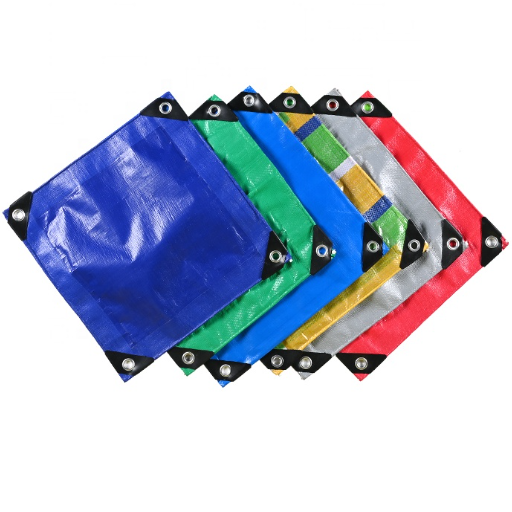
The material decision matters less if the second container does not match the first. That is the real fear behind most PE vs PVC sourcing questions, and it applies equally to whichever material you pick.
We run a documented 26-stage quality control system from incoming raw material through in-line checks on GSM, tensile, and dimensional accuracy to pre-shipment inspection. Batch test reports are available on request, and BV or SGS inspection can be arranged. See our 26-stage quality control for what is checked and when.
An importer in the Middle East once received a container where the covers measured thinner than the sample he had approved. He had no batch test report, no weighing check, and no recourse. The next supplier he approached asked one question first: what does the batch test report show? That single document, GSM and tensile and dimensional checks from the production run, is what let him hold the second supplier to the sample. It is the difference between a specification and a claim.
FAQ
Is PVC tarpaulin better than PE tarpaulin?
Neither is better in absolute terms. PVC resists abrasion, tearing, and chemicals better and generally lasts longer. PE costs less, weighs less, and covers more area per kilogram. Choose by application and service life, not by material preference.
How long does PE tarpaulin last?
Company-reported outdoor life runs from about one season at 60–100 GSM to several years at 200–300 GSM with UV stabilisation. Sun exposure and handling affect this more than GSM alone.
Can PE tarpaulin be welded like PVC?
No. PVC is joined by high-frequency welding, which fuses the material. PE is sewn and hemmed, with reinforcement at the fixing points. The two materials also need different repair methods.
Which is better for cold weather?
PVC with cold-resistance treatment is the better choice for sustained freezing. PE becomes brittle in hard frost. Specify a cold-resistant grade if PE must be used year-round in a cold climate.
What is the MOQ and lead time for PE vs PVC tarpaulin?
PE tarpaulin is typically 1,000 kg or one 20GP container; PVC tarpaulin is typically 3,000 kg. Production runs 15–25 days, and free samples are dispatched in about 3–5 business days.
Can I order PE and PVC tarpaulins together?
Yes. Both are produced within our group, so we can build a mixed container loading plan across PE, PVC, and layflat hose with a single set of export documents.