

Tarpaulin for Agriculture
The farm tarpaulin that holds up is the one matched to the job, not the one with the highest number on the label. A grain pile calls for a lighter, clean-surface grade. A silage bunker needs something opaque and close to airtight. A machinery cover left in a wind-exposed yard needs a heavier fabric with closer eyelet spacing.
PE TARPAULIN
60–300 GSM
Woven polyethylene with coating
PVC TARPAULIN
450+ GSM
PVC-coated polyester fabric
Match the Material to the Service Life
Neither material is better — the wrong choice is the one made for the wrong service life. If the cover is seasonal and replaced each harvest, PE is the cost-per-season winner. If the cover is a structure, PVC is the cost-per-year winner.
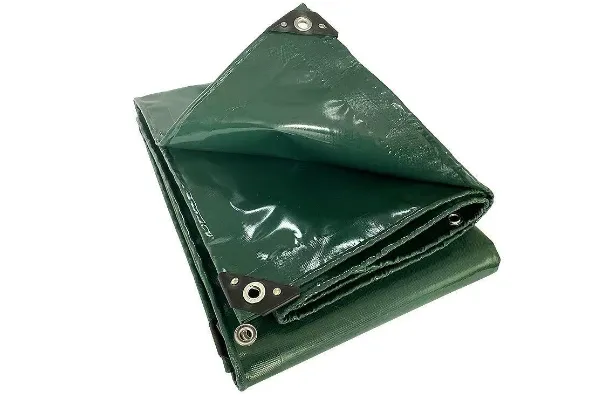
Tarpaulin GSM for Agriculture: What Grade Do You Need?
GSM is the finished weight of the fabric — the number that tells you how a farm tarpaulin will behave in the field.
| Farm Application | Recommended GSM | Material | What to Check |
|---|---|---|---|
| Crop protection, nursery, greenhouse | 90–180 GSM | PE, UV-stabilised | Light transmission, anti-drip for greenhouses |
| Grain drying and storage | 100–150 GSM | PE, clean surface | Smooth face, heat-sealed edges |
| Hay and straw covers | 120–150 GSM | PE, reinforced hem | Rope-reinforced hem, rustproof eyelets |
| Silage and bunker covers | 150–250 GSM | PE or PVC, opaque | Opaque finish, reduced air and light entry |
| Livestock shelter and equipment covers | 180–300 GSM | PE or PVC | Closer eyelet spacing, wind resistance |
| Pond and water containment | 250–300+ GSM | PE or PVC liner | Seam integrity, tested tensile |
Tensile Strength Follows the Weight
At 120 GSM you get roughly 400 N/5cm; step up to 180–200 GSM and that climbs toward 650 N/5cm. The heavy end of the PE range, 200–300 GSM, reaches up to 1,500 N/5cm.
PE vs PVC Tarpaulin for Farm Use
Choose by service life, handling requirements and cost per season.
SEASONAL COVERAGE
60–300 GSM
PE Tarpaulin
A lighter, lower-cost cover for a season or two of crop, grain and hay protection. Practical where the cover is replaced each harvest.
- Weight & Cost
- Lighter to handle; lower cost per square metre.
- Service Life
- Seasonal outdoor use rather than permanent exposure.
- Key Features
- Waterproof, UV-stabilised woven-and-coated fabric.
- Typical Uses
- Crop, grain, hay, straw and silage bunker covers.
PERMANENT STRUCTURES
300 GSM+
PVC Tarpaulin
The step up when the cover has to survive year after year — a permanent machinery shed, a structure taking snow or high wind, or a pond liner that cannot be allowed to fail.
- Weight & Cost
- Heavier to handle; higher initial material cost.
- Service Life
- Long-term use under sustained sun and handling.
- Key Features
- Coated polyester with welded seams for seam integrity.
- Typical Uses
- Permanent sheds, wind-exposed structures, pond liners.
Match the material to the service life. PE is the cost-per-season winner for a seasonal cover; PVC is the cost-per-year winner for a structure.
Read the Full PE vs PVC ComparisonFinishing and Customization for Farm Covers
A farm tarpaulin is rarely a stock item. Widths, lengths, colours and fastening all change with the job.
Edges & Eyelets
Rope-reinforced hems, rustproof aluminium eyelets and corner reinforcement, specified to the wind load the cover will see.
Size & Colour
Cut to your dimensions, in the colour that suits the job — opaque for silage, light-reflective where heat matters.
Printing & Private Label
Your logo or brand printed on the fabric, for resellers and cooperatives.
Non-Standard GSM
Non-standard size, colour or GSM quoted through our custom tarpaulin process — treated as standard, not premium.
Specify the wind conditions. Share the load the cover will take and the securing method. We will match the hems, eyelets and corner reinforcement.
Custom TarpaulinUV-Stabilised Farm Covers: What “UV Resistant” Actually Means
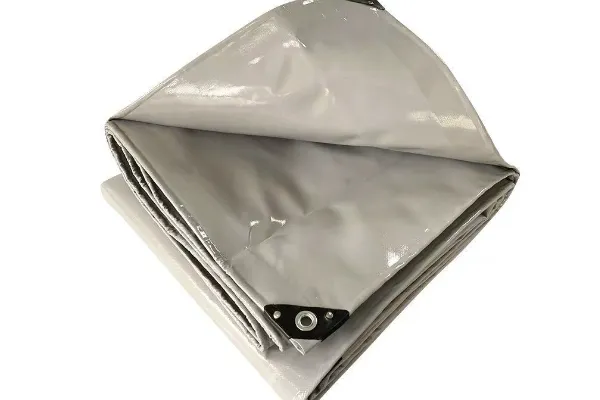
Sunlight is what ends most farm tarpaulins. Ultraviolet light breaks down the polymer until the fabric stiffens, chalks and cracks — long before abrasion or rain does the damage. The most important specification is the UV package, not the weight.
Compounded, Not Coated
HALS + Carbon BlackHindered Amine Light Stabilisers and carbon black, compounded into the PE or PVC during extrusion, protect through the life of the fabric.
Tested, Not Claimed
ASTM G154 / ISO 4892Ask for UV performance as tested hours under accelerated weathering, not as an adjective. A sprayed-on or unspecified label protects nothing you can verify.
*UV life depends on where the tarp sits. A PE cover that lasts three seasons in northern Europe may last under two in the Gulf or North Africa.
Specify by destination, not by “outdoor”. Name the climate and we will pick the grade for it. We publish treatment grades only where a batch test report supports them.
Explore Special TreatmentsApplications for Agricultural Tarpaulin
Protection matched to the job, the load and the season.
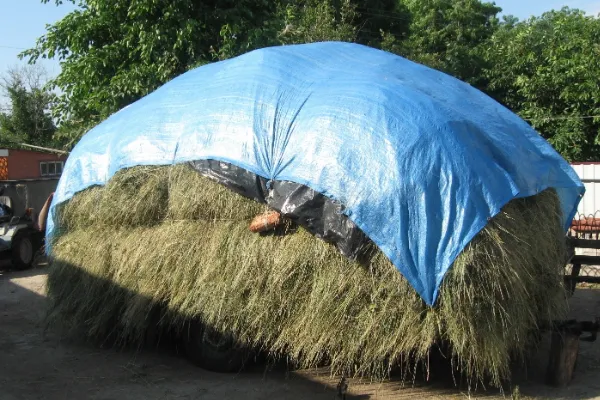
Grain & Feed Storage
A clean, smooth surface that will not contaminate the load, with sealed edges so wind and rain stay out. We specify 100–150 GSM PE with heat-sealed or reinforced edges.
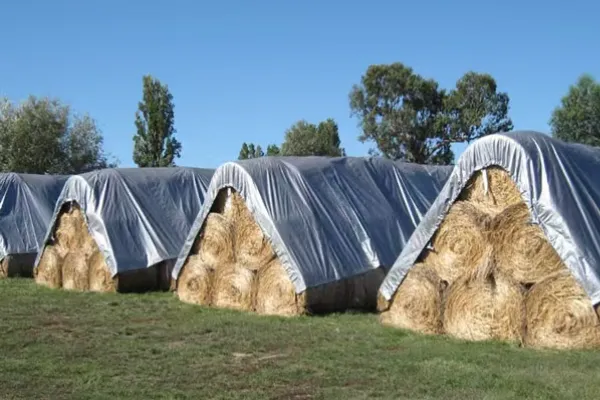
Hay & Straw
A haystack cover fails first at the eyelets, where wind works the fabric against the fixing. Rope-reinforced hems and rustproof aluminium eyelets spread that load.
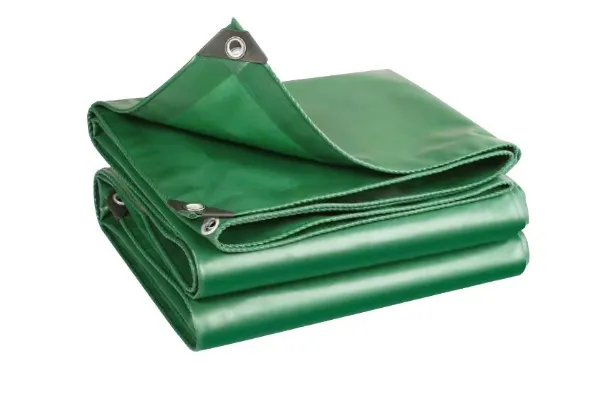
Silage & Bunker Covers
A cover that stays opaque and keeps air out, so the feed keeps its value. We supply 150–250 GSM. This is a tarpaulin cover, not dedicated silage film — tell us which you need.
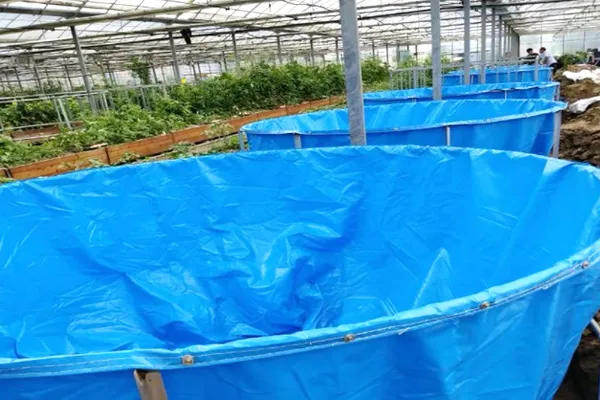
Equipment, Livestock & Water
Machinery left in an open yard needs 180–300 GSM with closer eyelet spacing for wind resistance. The same logic covers pond and channel liners, where seam integrity is the specification.
Quality Control and Export
A farm cover you buy in April has to match the sample you approved in February. Our documented 26-stage quality control system checks incoming materials, production and finished goods to help ensure your shipment matches the approved sample.
-
Incoming Material
Check raw materials before production.
-
In-Line Production
Monitor specifications during manufacturing.
-
Pre-Shipment Inspection
Verify finished goods before dispatch.
- GSM
- Tensile Strength
- UV Performance
- Dimensional Accuracy
Batch reports reference named methods such as ASTM D751, ISO 13934-1, ASTM D5034 and ASTM D4533. BV or SGS inspection is available on request, and we ship FOB Qingdao or CIF to your destination port with production lead times of 15–25 days.
Owned Production. Verifiable Capacity.
See the facilities behind your order.
- Production Bases
- 2
- Factory Area
- ~120,000 m²
- Main Lines
- 4
- Finishing Lines
- 6
- Monthly Output
- ~2,000 metric tons
CUSTOMER FEEDBACK
What Our Customers Say
★★★★★
“The PE tarpaulin rolls arrived with consistent GSM and mesh count across every batch. The seamless 4 m width cut our welding time on truck cover conversion.”
★★★★★
“We convert rolls into hay and grain covers. The 120–180 GSM medium grade with UV stabilisation held up well through a full outdoor season.”
★★★★★
“Roll dimensions matched our drawing exactly. The paper core and kraft paper wrapping kept the material clean and easy to load onto our cutting line.”
★★★★★
“The batch test report confirmed GSM and tensile before we released the rolls to production. That documentation made our incoming inspection straightforward.”
★★★★★
“Private-label packing for our retail sheet sizes was handled without extra back-and-forth. The rolls cut cleanly and the bales arrived retail-ready.”
★★★★★
“Width and coating consistency helped our conversion team maintain an efficient process. We now specify PE tarpaulin rolls by GSM and mesh count together.”
★★★★★
“Loading plans showed exactly how many rolls fit in our 20GP. Having one contact for packing details and shipping documents simplified our import process.”
★★★★★
“The recommended heavy-duty grade suited our industrial curtain conversion. Roll width, core size and UV level were confirmed before production started.”
★★★★★
“Colour matching and roll length options were handled clearly. The sample process helped us finalise the specification for our wholesale roll range.”
Swipe or drag to explore
01 / 09
FAQ
Frequently Asked Questions About Tarpaulin for Agriculture
Find answers about grade selection, material differences, outdoor service life and order requirements for farm covers.
Have Another Question?Share your application and surface area with our export team.
What is the best tarpaulin for agriculture?
There is no single best grade — the right one is matched to the job. Lighter 90–150 GSM PE suits crop, grain and hay covers; 150–300 GSM suits silage, livestock and equipment; and 300+ GSM PVC suits permanent structures. Specify the application first, then the grade.
What GSM tarpaulin do I need for grain storage?
Grain storage typically uses 100–150 GSM PE tarpaulin with a clean, smooth surface and sealed edges. The surface matters as much as the weight, because a rough or contaminated face can spoil the load it is protecting.
What GSM tarpaulin for a silage cover?
Silage and bunker covers usually run 150–250 GSM, in an opaque finish that keeps air and light out to preserve feed value. This is a tarpaulin cover, not dedicated silage film — confirm which your operation needs before ordering.
Is PE tarpaulin good for farm use?
Yes — PE tarpaulin is the standard farm cover material for seasonal crop, grain and hay protection. It is lighter and lower in cost per square metre than PVC. Where it gives ground is service life under sustained sun, which is why UV stabilisation is the specification to check.
How long does a PE tarpaulin last in the sun?
Service life depends on the UV package and the climate, not on the GSM alone. A UV-stabilised PE cover can last several seasons in a temperate climate and fewer in a hot, high-UV one. Specify tested UV hours and name the destination so the grade can be chosen for it.
Can I cover hay and silage with the same tarpaulin?
Not ideally. Hay needs a cover that sheds rain and stays put at the eyelets; silage needs one that is opaque and close to airtight. The two fail for different reasons, so the specification should be different even though both often sit in the 120–250 GSM band.
BUILT TO YOUR SPECIFICATION
Get a Farm-Cover Specification
The grade that fails is the one chosen for the wrong job. Tell us the application, the surface area, the service life you expect and the destination port. We will recommend a grade and send a sample so you can check the fabric before committing to a container — FOB Qingdao or Shanghai, with CIF and DDP available.
START YOUR ENQUIRY
Send Your Farm-Cover Specification
Request a Free Sample
Grade recommendation · Sample plan · Landed-cost estimate