

The Three Layers of Tarpaulin Compliance
Most supplier certification pages fail for one reason: they mix three different documents into one wall of logos. Separate them and the subject becomes simple — each layer answers a different buyer question.
COMPANY CERTIFICATION
ISO 9001 / 14001
Attests to the factory’s management system, not to any single product
PRODUCT CERTIFICATION
CE / EN 13501-1
Attests that a product conforms to a specific requirement
Third-Party Test Report — One Batch, One Date, One Specification
A document issued by an independent laboratory such as SGS or Bureau Veritas, recording that a named batch passed a named test to a named method. It is not a standing certification; it proves one batch, on one date, against one specification. When you know which question you are asking, you know which document to request.
What Each Certification Actually Covers
What each document means, and when you actually need it.
| Certification / Report | Type | What It Covers | When You Need It |
|---|---|---|---|
| ISO 9001 Quality management | Company | Quality-management system | Any supplier vetting — the baseline |
| ISO 14001 Environmental management | Company | Environmental management system | Buyers with ESG or procurement compliance requirements |
| CE CE marking | Product | EU market access and safety | Shipping finished product into the EU |
| REACH EC 1907/2006 | Product / chemical | Restricted substances | EU chemical compliance — phthalates, heavy metals |
| EN 13501-1 NFPA 701 | Product | Flame retardance | Sites that require a fire-rated sheet |
| SGS / BV Third-party report | Third-party test | A named batch, a named test | Proving a claim for a specific order |
Lead With ISO 9001 — Then Follow the Market
The one to lead with is almost always ISO 9001 — it is the baseline a professional buyer checks first, and the certificate many suppliers cannot actually produce when asked. Beyond it, the right document follows the market and the application: REACH matters for the EU, flame retardance matters for sites with fire requirements, and a test report matters for the specific order in front of you.
What TONGYUAN Holds — and What We Will Not Claim
We list only what we can evidence, and we say plainly which claims we will not make.
COMPANY CERTIFICATION
Company
ISO 9001 Factory Certification
This is the document that says the factory runs a documented, audited system — and it is the one we can hand you before you sign.
- What It Is
- ISO 9001 quality-management certification for the factory.
- What It Covers
- The factory’s documented, audited management system.
- Company-Reported
- The certificate number, scope and expiry are provided in the compliance pack.
- When to Ask
- Before you sign — it is the baseline a professional buyer checks first.
THIRD-PARTY TEST REPORTS
Per Batch
SGS / Bureau Veritas Reports
Independent test reports issued on request and travel with the order. These are test reports, not certifications — they prove a named batch against a named method.
- What They Are
- Independent test reports through SGS or Bureau Veritas.
- What They Prove
- A named batch, on one date, against one specification.
- Where They Live
- On our quality-control page, not as a badge — because they are per-batch.
- When to Ask
- For a specific order, before the price.
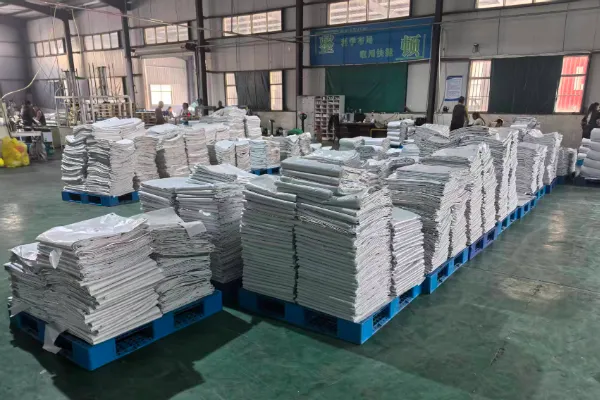
What we will not claim. We do not list CE, REACH, RoHS or any flame-retardant certification as held unless a current certificate exists for the specific product you are buying. If your tender requires one of these, tell us which — we will confirm whether we can supply it, and tell you straight if we cannot. The factory and the quality-control system are the physical evidence behind these documents; the certifications are the paperwork layer on top.
Tell Us Which Certification Your Tender RequiresHow to Verify a Supplier’s Certification
A certificate is only worth the paper it is printed on if you check four things. Do this with any supplier, including us.
The Certificate Number
Every real certificate carries a unique number. If a supplier shows a logo without a number, you are looking at marketing, not evidence.
The Issuing Body
Check that the body actually issues that type of certificate — an ISO 9001 certificate comes from an accredited certification body, and its accreditation can be looked up.
The Scope
The certificate names what it covers — which site, which activities, which products. A certificate for “textile manufacture” does not automatically cover tarpaulins.
The Expiry Date
Certificates lapse. An expired certificate is not a certificate.
The uncomfortable truth is that certificates can also be expired, mis-scoped or copied. That is not a reason to distrust every supplier; it is a reason to check before you rely on one. A supplier who hands you the number, scope and expiry without being asked is already ahead of most of the market.
Verify a CertificateCertifications vs Test Reports
The two documents are confused so often that it is worth stating the difference plainly. One is general and standing; the other is specific and one-off.
Certification
StandingAttests to an ongoing condition — a management system that is audited periodically, or a product type that conforms to a requirement. It is general and it is standing.
Test Report
One-offRecords a specific event — that a named batch, on a named date, passed a named test to a named method. It is specific and it is one-off.
*For a first order, both matter, in sequence: the certification tells you the factory runs a compliant system; the test report tells you the specific container you are about to buy was actually tested.
Need the testing detail? Our tarpaulin quality control page explains the testing in full — which methods, which values, and what a batch report should contain.
Request the Compliance Pack
CUSTOMER FEEDBACK
What Our Customers Say
★★★★★
“We asked for the ISO 9001 certificate number, scope and expiry before signing. They sent all three without us having to chase — that is the first supplier who has done that unprompted.”
★★★★★
“Our tender required REACH compliance. They told us straight which product lines held it and which did not, rather than sending a badge image and hoping we would not check.”
★★★★★
“We needed a flame-retardant grade for a site requirement. They confirmed EN 13501-1 with a current test report rather than a certificate — and explained exactly why that distinction matters.”
★★★★★
“The compliance pack arrived with certificate numbers, scopes and expiry dates on every document. Our procurement team did not have to request a single follow-up.”
★★★★★
“We asked them to verify a certificate from a competitor. They walked us through the issuing body and accreditation lookup — that honesty is why our own orders went to them.”
★★★★★
“Our ESG team required ISO 14001 for the supplier audit. They had it ready, with the scope clearly covering the tarpaulin production lines — not just a general textile certificate.”
★★★★★
“We ran the certificate number through the issuing body’s register ourselves. It checked out, scope and expiry included. That level of verifiability is rare in this category.”
★★★★★
“They refused to list CE as held for a product line that did not have a current certificate. That refusal was the most credible thing any supplier told us during the tender.”
★★★★★
“SGS inspection was arranged on our first order and the report travelled with the shipment. Between the company certificate and the batch report, we had both layers of evidence on file.”
Swipe or drag to explore
01 / 09
FAQ
Frequently Asked
Frequently Asked
Questions About
Certifications & Compliance
Find answers about which certifications to ask for, how to verify them, and what each document actually proves.
Have Another Question?Share your market and tender requirements with our export team.
What certifications should a tarpaulin factory have?
At minimum, an ISO 9001 quality-management certification, which is the baseline any serious supplier can produce. Beyond that, the right documents depend on the market and application: CE and REACH for the EU, a flame-retardant certification for fire-rated sites, and third-party test reports for specific orders.
How do I verify a supplier’s certification?
Check four things: the certificate number, the issuing body, the scope, and the expiry date. A certificate without all four is not evidence — ask for the number and cross-check it with the issuing body.
What is the difference between a certificate and a test report?
A certificate attests to an ongoing condition — a system or a product type. A test report records a specific event — a named batch passing a named test on a named date. The certificate is standing; the report is one-off.
What does CE marking mean for tarpaulins?
CE marking is a product certification that allows finished product to be placed on the EU market and confirms it meets the relevant EU requirements. It is a specific product claim, not a company claim, and it is separate from REACH chemical compliance.
What does REACH compliance mean for tarpaulin?
REACH (EC 1907/2006) regulates the chemicals used in products sold in the EU — for tarpaulins, that mainly means restricted substances such as phthalates and heavy metals. REACH compliance is a chemical-compliance claim, separate from CE marking.
Can a certification expire?
Yes. Most certifications carry an expiry date and require periodic re-audit. An expired certificate is not evidence — check the expiry date before you rely on it.
THE PAPERWORK LAYER
Certifications That Inform, Not Just Sell
Tarpaulin certifications are the paperwork layer that turns a supplier’s promises into something you can check. The trick is to separate the three layers — company certification, product certification, and third-party test report — and to ask for the document that matches the question you are actually asking.
We state only what we can evidence, label company-reported claims as such, and will tell you plainly which documents we can and cannot supply before you commit. That is the difference between a certification page that sells and one that actually informs.
START YOUR ENQUIRY
Request the Compliance Pack
Verify a Certificate
Company certificate · Product certification · Batch test report