
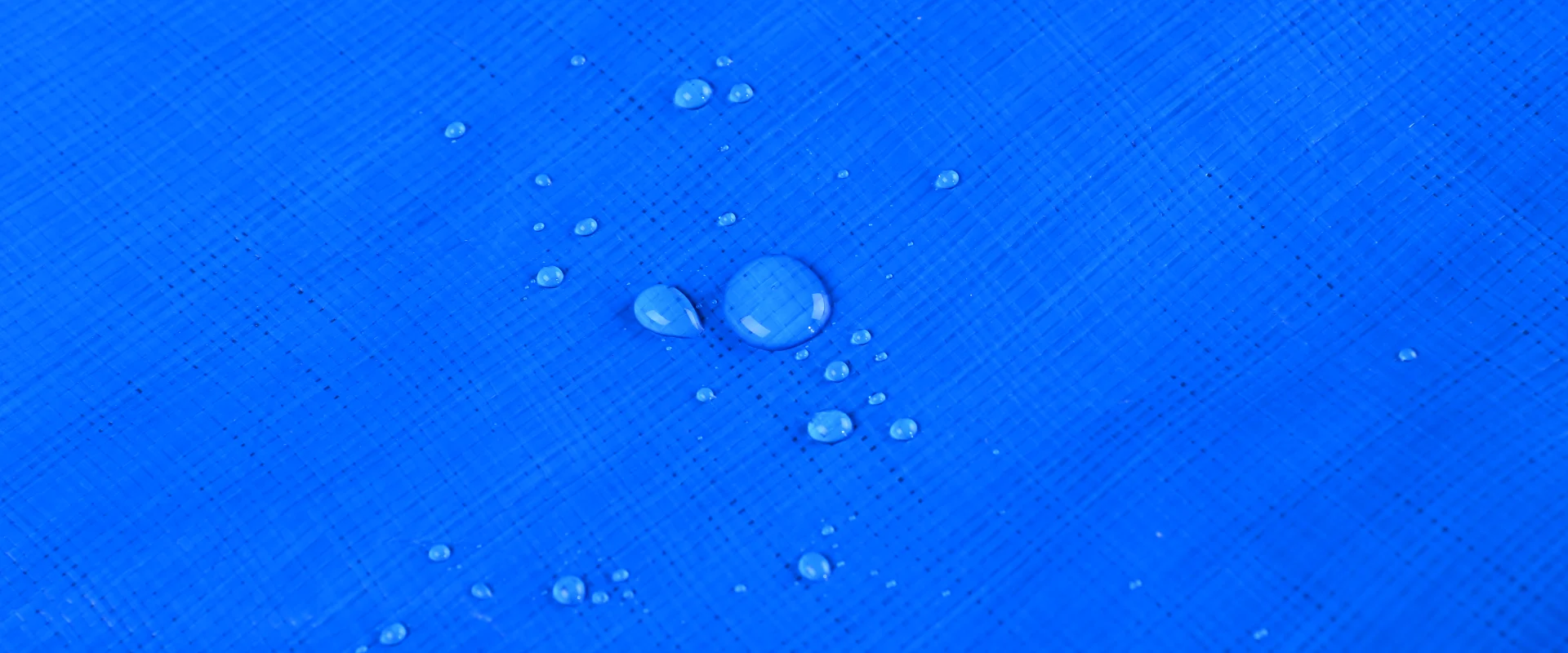
What Makes a Construction Tarpaulin Different
A construction tarpaulin is not a heavier general-purpose tarp. It works in a specific environment: high and gusting wind, abrasive contact with scaffold tubes and brick, repeated handling by crews, and exposure that runs for months rather than a weekend.
FAILURE MODE 01
Fabric Failure
The weave tearing or the coating breaking down under UV.
FAILURE MODE 02
Fixing-Point Failure
The eyelet or hem giving way long before the fabric itself is worn out.
A Cover Is Only as Strong as the Way It Is Fixed
That environment produces two failure modes, and both decide the specification. The second — fixing-point failure — is the more common. The fastening detail belongs in the specification, not as an afterthought.
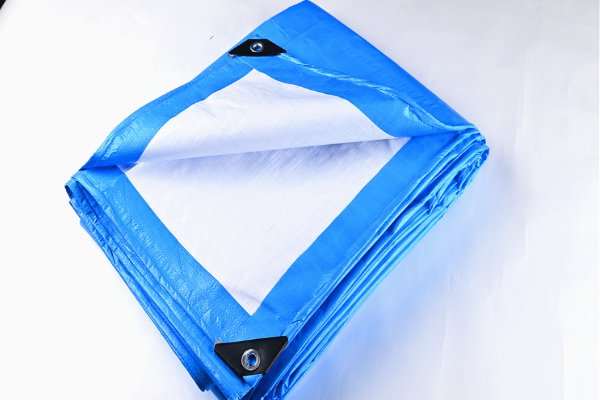
GSM Selection for Site Duty
Compare recommended grades and typical tensile strength by construction duty.
| Site Duty | Recommended Grade | Typical Tensile |
|---|---|---|
| Dust and privacy screening | 60–100 GSM PE | from 250 N/5cm |
| General material and equipment cover | 120–180 GSM PE | 400–650 N/5cm |
| Scaffold enclosure, long-term | 200–300 GSM PE or 450 GSM+ PVC | up to 1,500 N/5cm |
| Temporary roofing, high wind | 300 GSM PE or 550 GSM+ PVC | specify flame-retardant where required |
Starting Points, Not Absolutes
Wind exposure, season length and how the cover is handled on site shift the grade up or down. Tell us the duty and we will recommend a grade rather than guess.
PE vs PVC for Construction
The right choice depends on the job — not on a single “best” answer.
COST-PER-SEASON
60–300 GSM
PE Tarpaulin
A woven HDPE fabric with an LDPE coating on both sides. It is the cost-per-season choice for general site covers, material protection and temporary enclosure.
- At 120 GSM
- Roughly 400 N/5cm tensile.
- At 180 GSM
- Climbs toward 650 N/5cm.
- Range
- 60–300 GSM, coated both sides.
- Typical Uses
- General site covers, material protection, temporary enclosure.
MULTI-SEASON / FLAME-RETARDANT
450 GSM+
PVC Tarpaulin
Knife-coated or laminated onto a polyester scrim, which gives it the abrasion and tear resistance a long-term scaffold enclosure or temporary roof needs.
- Starting At
- Around 450 GSM and running upward.
- Abrasion
- High resistance for long-term enclosures.
- Flame-Retardant
- The material to reach for when an FR grade is required.
- Cost vs Life
- Costs more per m²; lasts several seasons where light PE lasts one.
Neither material is better in the abstract. The one that fails is the one chosen for the wrong duty.
Read the Full PE vs PVC ComparisonFastening That Survives a Site
Most construction covers fail at the fixing points, not in the middle of the fabric. Wind loads concentrate at the eyelets, and a plain punched eyelet in a raw hem will tear out under sustained flapping.
Rope-Reinforced Hem
A rope sealed into the hem spreads the load across the whole edge instead of concentrating it at the eyelet.
Corner Reinforcement
Extra patches at the corners, where wind stress is highest and pulling forces are most concentrated.
Eyelet Spacing
Set to the duty. Wider spacing means each eyelet carries more load; too wide and the fabric sags and flaps between fixings.
Specify these rather than accepting whatever comes off the line. The fastening is not an accessory to the cover; it is the part that determines whether the cover stays on the structure.
Eyelet Spacing & Rope-Reinforced HemsFlame-Retardant & UV Requirements
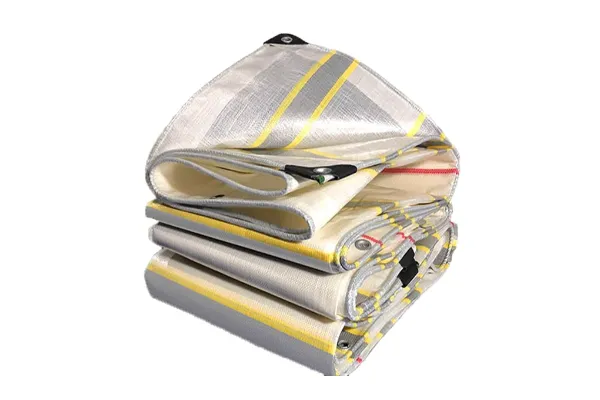
Not every construction tarpaulin needs to be flame-retardant, and claiming it when it is not tested is worse than not claiming it at all.
Flame-Retardant Grades
TestedTested against recognised standards — DIN 4102 / EN 13501-1 (Class E, B1) in Europe, NFPA 701 or CPAI Section 5/6 in North America. We publish FR grades only where a test report supports the claim, and the report is available on request.
UV Stabilisation
Every sunny coverA UV-stabilised 200 GSM cover will outlast an untreated one of the same weight, because the coating is protected against the breakdown that turns a tarp brittle within a season.
Ask for the UV package when the cover will be up for more than a few weeks.
Request a compliance pack. Flame-retardant and UV test reports for your site requirements.
Scaffolding Enclosure & Site Covers
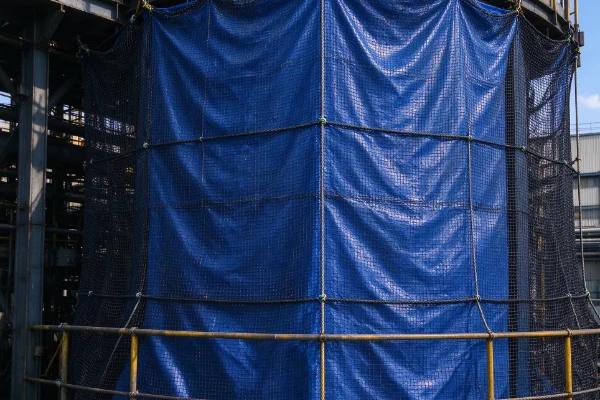
Scaffold enclosure does two different jobs, and the material is not the same for both.
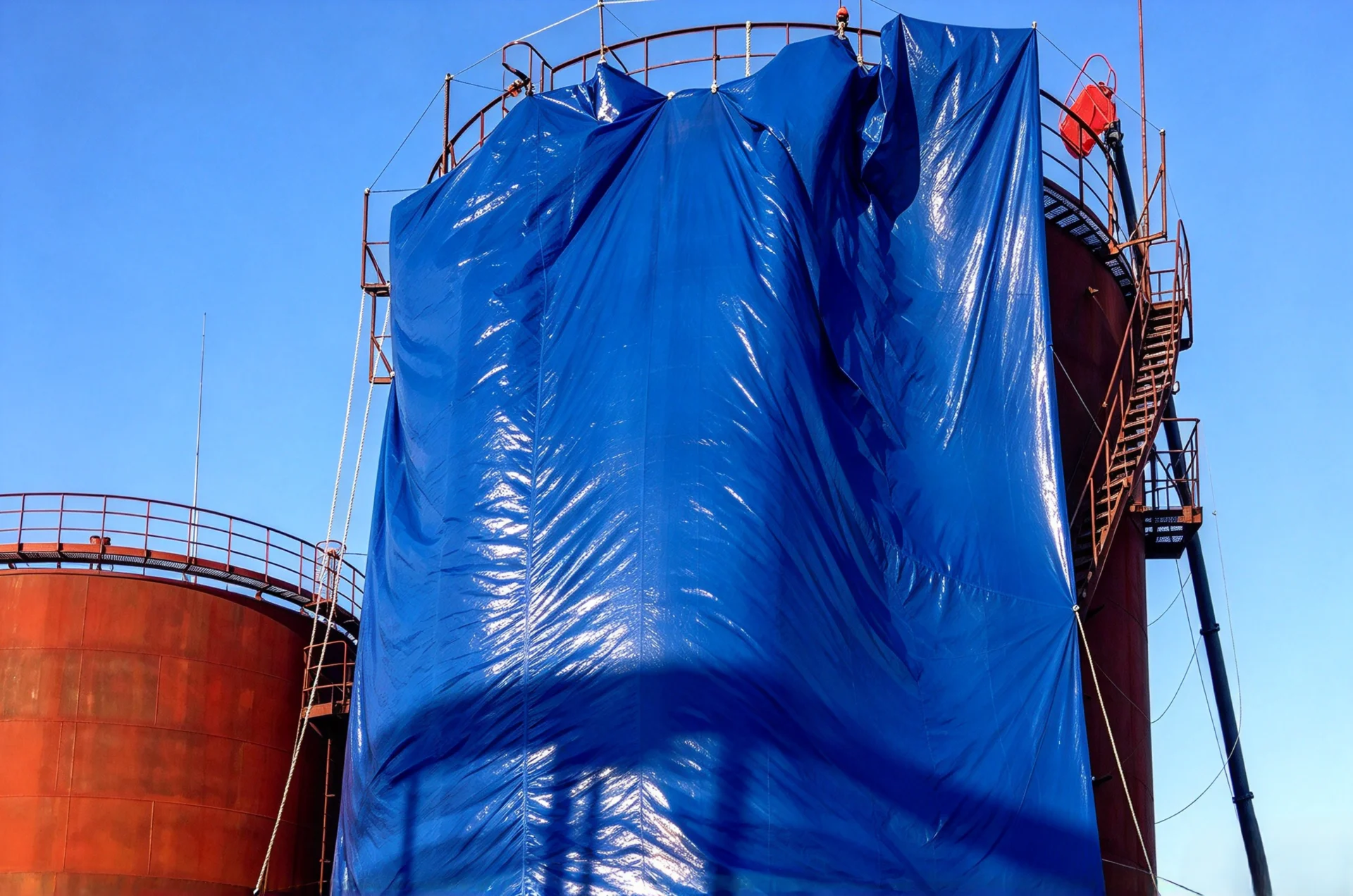
Solid Sheeting
PE or PVC sheeting excludes rain, dust and wind, and turns a scaffold into a protected working area or weather shield. It also increases wind load, which is why the fixing system matters more than the fabric.
Mesh & Debris Netting
Mesh lets air pass, which keeps the wind load down and stops falling debris and tools. It is not a weather seal; it is a containment screen. Choose solid sheeting when weather exclusion is the priority, and mesh when airflow and wind loading are.
How to Specify a Construction Tarpaulin
When you send an enquiry, six things let us quote a specification instead of a guess. Every order passes our 26-stage quality control , with batch test reports available on request.
-
Application & Dimensions
Scaffold enclosure, temporary roofing, debris containment or general site cover — plus the surface to be covered, with overhang allowance.
-
Material & Fastening
PE or PVC and the duty level, plus eyelet spacing, rope-reinforced hem and corner reinforcement.
-
Compliance & Logistics
Whether the cover must meet a named flame-retardant or UV standard, and the destination port for FOB Qingdao or CIF quoting.
- MOQ 1,000 kg PE
- MOQ 3,000 kg PVC
- Production 15–25 days
- Trial-order terms negotiable
MOQ for PE construction tarpaulin is typically 1,000 kg or one 20GP container; PVC typically 3,000 kg. Production runs 15–25 days from order confirmation, and trial-order terms are negotiable.
Send Your Scaffold Dimensions
Receive a grade, a fastening spec and a landed-cost estimate.
- MOQ — PE
- 1,000 kg
- MOQ — PVC
- 3,000 kg
- Production
- 15–25 days
- Sample Dispatch
- 3–5 days
- QC Stages
- 26
CUSTOMER FEEDBACK
What Our Customers Say
★★★★★
“We ordered 240 GSM PE for a scaffold wrap on a 14-storey refurbishment. The rope-reinforced hem held through two storm cycles that tore out a competitor’s cover on the same site.”
★★★★★
“The flame-retardant PVC came with an EN 13501-1 Class B1 test report in the same shipment. Our site inspector signed off the temporary roofing without a second round of samples.”
★★★★★
“Batch test reports listed GSM and tensile for each roll — exactly what our incoming inspection wanted for the construction-site tarpaulin order. Roll widths matched the drawing to the millimetre.”
★★★★★
“We specified eyelet spacing at 50 cm for a high-wind enclosure. The production team confirmed the spacing in the pre-production sample before running the full 20GP, no rework needed.”
★★★★★
“Solid PE sheeting for our debris containment zone and mesh netting for the airflow side — both came on one order with matched colour and identical hem finishing. Site installation was straightforward.”
★★★★★
“The 200 GSM UV-stabilised PE survived a full summer on our temporary roof deck without becoming brittle at the corners. We are reordering the same grade for the next phase.”
★★★★★
“Trial order at 1,000 kg arrived in under four weeks. The PVC at 550 GSM handled daily handling and abrasion on the scaffold tubes far better than the PE we used previously.”
★★★★★
“They flagged that our original 180 GSM PE was light for a permanent scaffold enclosure, and recommended 250 GSM with reinforced corners instead. That advice saved us a mid-project replacement.”
★★★★★
“Loading plans showed how many rolls fit in our 40HQ, and CIF pricing to Jebel Ali was quoted in the same email. One contact handled packing, documents and delivery — no chasing around.”
Swipe or drag to explore
01 / 09
FAQ
Frequently Asked
Frequently Asked
Questions About
Construction Tarpaulin
Find answers about GSM selection, scaffolding, flame-retardant requirements and temporary roofing.
Have Another Question?Share your site dimensions and intended use with our export team.
What tarpaulin is used for construction sites?
Solid PE or PVC sheeting for weather exclusion and temporary enclosure, and mesh debris netting for containment. The right choice depends on whether the cover must keep weather out or simply stop debris and reduce wind load.
What GSM tarpaulin do I need for scaffolding?
For a long-term scaffold enclosure, 200–300 GSM PE tarpaulin or 450 GSM-plus PVC is the usual specification. Lighter 60–100 GSM PE suits dust and privacy screening only.
Is construction tarpaulin fire retardant?
Only when specified and tested. Flame-retardant grades are tested against DIN 4102 / EN 13501-1, NFPA 701 or CPAI, and we publish the grade only where a test report supports it.
Can tarpaulin be used as temporary roofing?
Yes — a heavy PE or PVC cover with a proper fall and correct fastening sheds rain from site openings. It is not a permanent roof, and it must be fixed to take the wind load at the eyelets.
How do you fix a tarpaulin to scaffolding?
Through eyelets with a rope-reinforced hem, tied or bungeed at close spacing. A cover fixed at 50 cm intervals survives wind that tears one fixed only at the corners.
SPECIFY THE COVER, NOT JUST THE FABRIC
Specify the Cover, Not Just the Fabric
The cover that fails on a construction site is rarely the one with the wrong fabric — it is the one with the wrong grade for the duty, or the wrong fastening for the wind. Specify 200–300 GSM PE or 450 GSM-plus PVC by what the cover must survive, put the eyelet spacing and hem reinforcement into the order, and ask for the test report when flame-retardant performance is required.
START YOUR ENQUIRY
Request a Free Sample
Grade recommendation · Fastening spec · Landed-cost estimate