

What a Flame Retardant Tarpaulin Means — and What It Does Not
Flame retardancy is a measured property, not a claim. A treated cover is formulated so that it resists ignition and slows the rate at which flame spreads, and that performance is verified against a standard with pass/fail criteria — char length, residual flame time, weight loss. The certificate that matters on a tender is the one for the specific standard, not the word “fireproof” in a listing.
FLAME RETARDANT
Slowed Spread
Resists ignition and slows flame spread to a named standard
FIREPROOF
Will Not Burn
No PE or PVC tarpaulin is fireproof — the correct term is flame retardant
The Honest Limit
A fire-rated cover will still burn if a sustained flame is held to it. The treatment buys time and reduces spread; it does not make the fabric incombustible. If an application genuinely needs non-combustible material, tarpaulin is the wrong product — and a supplier who will not say so is one to be careful with.
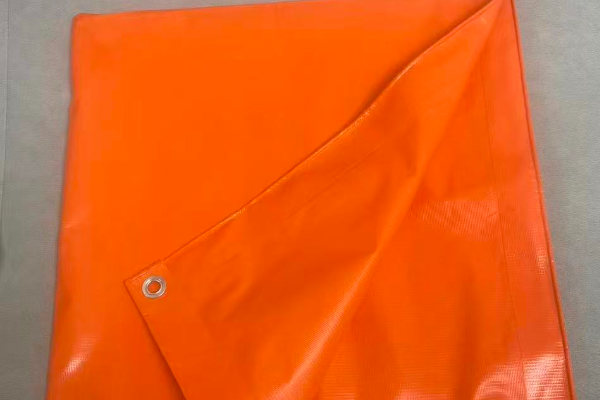
Flame-Retardant Standards by Market
Standards are regional. The first question is not “is it fire rated?” but “which rating does my market enforce?”
| Market / Use | Standard | What It Certifies |
|---|---|---|
| North America (tents, curtains, events) | NFPA 701 | Flame propagation of textiles and films |
| European Union (reaction to fire) | EN 13501-1 | Reaction-to-fire classification (e.g. B-s2-d0) |
| Germany | DIN 4102 B1 / B2 | Limited combustibility (B1 stricter) |
| France (public venues, tents) | NFP 92-507 M1 / M2 | Fire behaviour (M1 stricter) |
| Tentage and shelters | CPAI-84 | Tentage material flammability |
Name the Standard Up Front
We manufacture to the standard your market requires and supply the test report for that grade. It changes both the compound and the documentation, so it belongs in the first enquiry, not the last.
PE vs PVC: Which Base for Flame Retardancy?
Where FR is regulated, PVC is the usual base fabric. PE can be treated but serves different applications.
FLAME RETARDANT BASE
450 GSM+
PVC Tarpaulin
Most often specified for flame-retardant grades. Tents, curtains, event and industrial enclosures are PVC’s territory.
- FR Applications
- Tents, curtains, event and industrial enclosures.
- Common Treatments
- Flame retardancy, UV, anti-static, cold resistance.
- Standard Base
- Knife-coated PVC with high-frequency welded seams.
- Service Life
- Long-term use with daily sun and repeated handling.
TREATABLE BASE
60–300 GSM
PE Tarpaulin
Can be treated, but where FR is regulated, PVC is the usual base fabric. PE serves UV and anti-mildew applications.
- FR Applications
- Where FR is required, PVC is usually specified.
- Common Treatments
- UV stabilisation, anti-mildew.
- Standard Base
- Woven polyethylene with coating.
- Service Life
- Seasonal outdoor use, 1–3 years.
Tell us the application and we will confirm which material the standard points you toward. PE and PVC options are available with the treatment your environment requires.
Explore Special TreatmentsTarpaulin for Tents: Specifications and Standards
Tensile, flame retardancy, blackout and weldability — the values a marquee roof actually depends on in wind.
Tensile, Tear & Adhesion
PVC coated polyester tent fabric carries tensile strength of 2200–4000 N/5cm by grade, with tear strength around 250–550 N. Test methods follow ASTM D751 and ISO 13934-1.
Flame-Retardant Standards
Matched to your market: DIN 4102 B1/B2 or EN 13501-1 in the EU, M1/M2 (NFP 92-507) in France, NFPA 701 / Title 19 in the US, CAN/ULC-S109 in Canada. Confirmed by test report.
Blackout & Surface Finish
Blackout fabric blocks 99% or more of light for event interiors and projection. Surface finishes run from matte to gloss, with acrylic lacquer or PVDF topcoats for longer outdoor life.
Weld-Compatible Fabric
High-frequency welding is the standard join for PVC coated polyester. The coating and scrim are made to fuse, not to delaminate under heat, so seams hold under wind and rain load.
We say “flame retardant”, never “fireproof”. No coated fabric in this range is fireproof. Tell us the standard your venue or market requires and we will confirm the grade and supply the test report.
Flame-Retardant & UV TreatmentsChoosing the Right Treatment for Your Environment
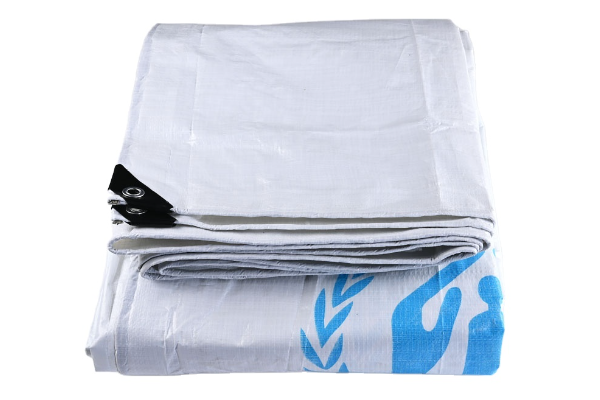
Start from the environment and the risk, then the treatment follows.
Sun & Outdoor Exposure
UV stabilisationPE or PVC base. Ask for the accelerated-weathering figure for the grade.
Fire, Welding, Public Venue
Flame retardancyPVC base, to a named standard: NFPA 701, EN 13501-1, DIN 4102, M1/M2.
Humid / Tropical Storage
Anti-mildewPE base. For grain, feed and any cover stored where the air stays wet.
Low Temperature
Cold resistancePE or PVC base. For Russia and Northern European winters.
Dust- or Spark-Sensitive Site
Anti-staticPVC base. Where a static charge is the risk rather than open flame.
Not sure which treatment your environment demands? Tell us the application and the climate and we will recommend the combination rather than up-sell one that is not needed.
Request a Sample Test ReportWhere Treated Tarpaulin Is Specified
Applications that carry a fire, UV or humidity requirement.
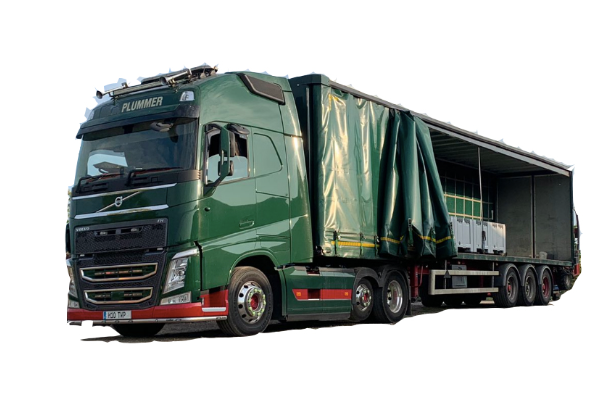
Truck & Trailer Covers
UV-stabilised PE or PVC grades for daily routes and coastal humidity.
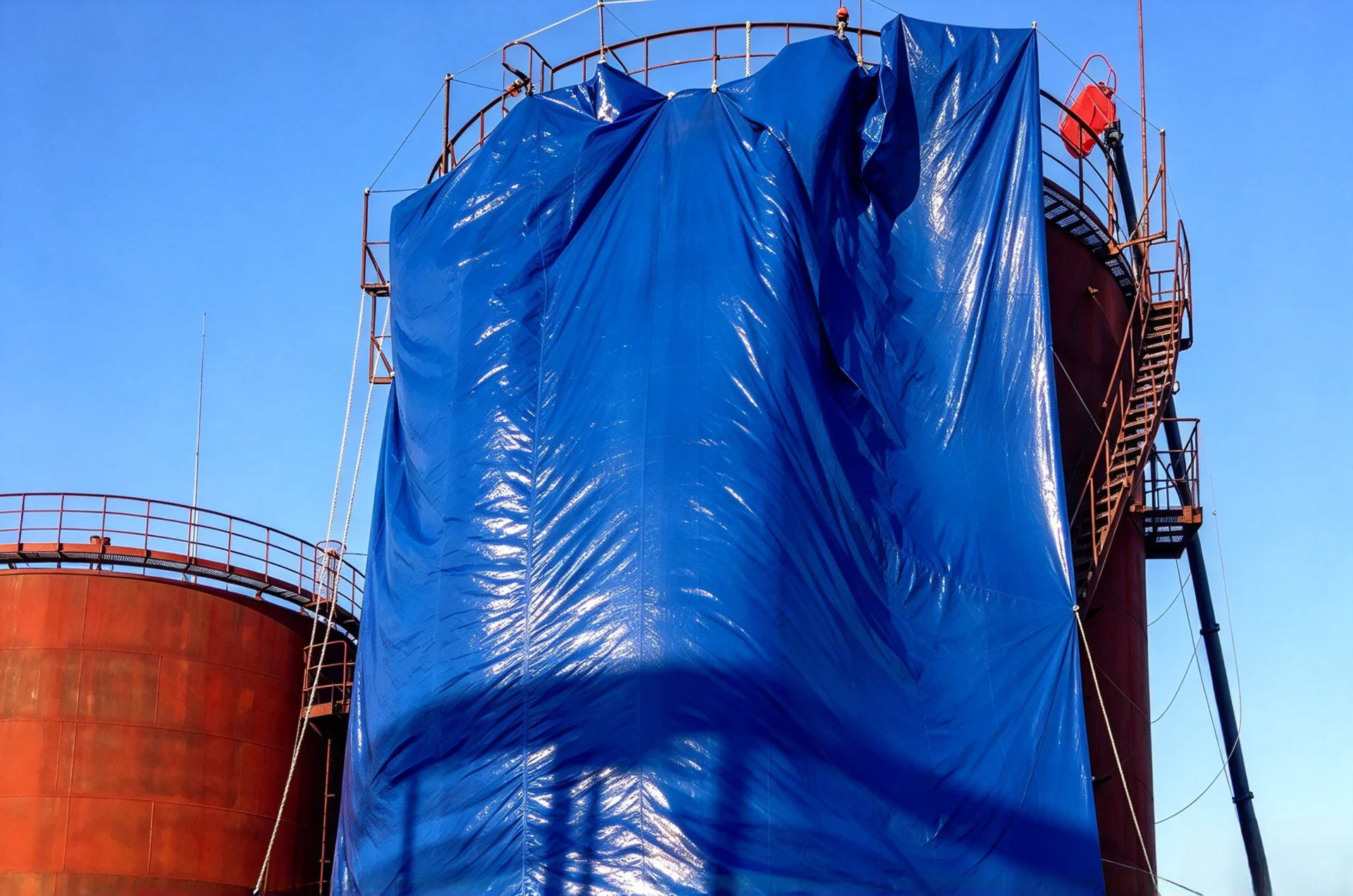
Construction Enclosure
Flame-retardant PVC to a named standard, for scaffold sheeting and temporary site enclosures.
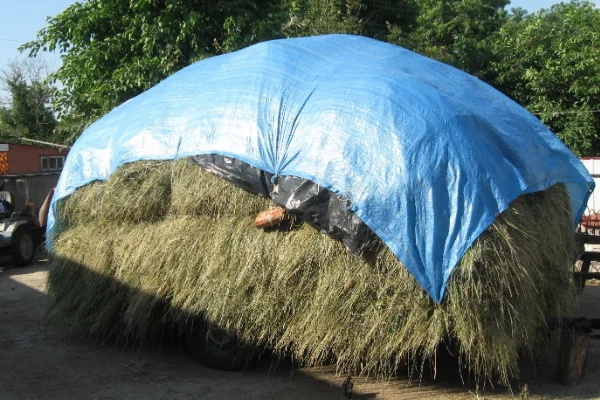
Grain & Silage
Anti-mildew PE grades for humid and tropical storage in Southeast Asia, Gulf coastal and West Africa.
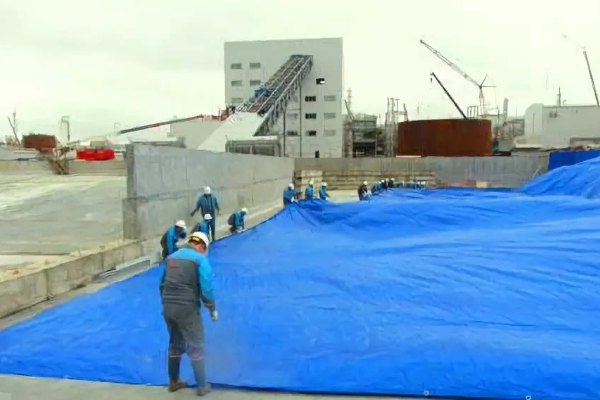
Industrial Equipment Covers
Anti-static PVC for dust- and spark-sensitive sites, and cold-resistant grades for low-temperature storage.
How to Specify and Verify a Treatment
When you send an enquiry, six things let us quote a treatment specification instead of a guess. The verification path is the same for every treatment: a 26-stage quality control system holds the grade consistent from batch to batch.
-
Application
Tent, curtain, truck cover, construction enclosure, storage.
-
Material & GSM
PE or PVC, and the duty level.
-
Treatment
Flame retardancy, UV, anti-mildew, anti-static, cold resistance.
- The Standard
- Quantity & Port
- Documentation
The standard: NFPA 701, EN 13501-1, DIN 4102, M1/M2, or CPAI-84, where one applies. Quantity & port: so we quote FOB Qingdao or CIF to your port. Documentation: test report, certificate scope, third-party inspection.
Verification Path
Independent inspection and documented scope.
- Batch Test Report
- Named standard
- Independent Inspection
- BV or SGS
- Certificate Scope
- Check against market
- MOQ (PE)
- 1,000 kg
- MOQ (PVC)
- 3,000 kg
CUSTOMER FEEDBACK
What Our Customers Say
★★★★★
“The flame-retardant PVC arrived with an NFPA 701 test report for the exact batch, not a generic certificate. Our tent fabricator cleared incoming inspection the same day the container was opened.”
★★★★★
“We needed DIN 4102 B1 for a German exhibition build. Tongyuan confirmed the grade, sent the report for review before we placed the PO, and the rolls matched the sample on coating weight and hand feel.”
★★★★★
“Our grain covers sit in Gulf coastal humidity for months. The anti-mildew PE with UV stabilisation held through a full storage season without the coating going tacky or spotting.”
★★★★★
“The M1/M2 flame-retardant PVC was specified for a French public venue, and the certificate scope matched exactly what the inspector asked for. No back-and-forth on documentation at handover.”
★★★★★
“We convert PVC for spark-sensitive areas and needed anti-static plus flame retardancy in one grade. Tongyuan quoted both treatments on the same base fabric instead of pushing us to split the order.”
★★★★★
“The UV test figure came with the grade sheet — hours, not adjectives. That let our technical team compare two PE options on real data before we chose the heavier grade for Russian winter installation.”
★★★★★
“BV inspection was arranged on our request, and the report confirmed GSM, tensile and the flame-retardant grade against the named standard. Our insurer accepted the documentation without further queries.”
★★★★★
“We ship truck curtains to North America and need NFPA 701 on every run. Batch-to-batch consistency has held across three orders, and the welded seams survive the fold-and-unfold cycle on daily routes.”
★★★★★
“Sample arrived in four business days with the treated fabric and the test report in the same parcel. We ran our own burn test on the offcut before releasing the bulk order — it matched the certified grade.”
Swipe or drag to explore
01 / 09
FAQ
Frequently Asked
Frequently Asked
Questions About
Flame Retardant Tarpaulin
Find answers about flame-retardant standards, UV treatment, the difference between flame retardant and fireproof, and order requirements.
Have Another Question?Share your application, climate and the standard your market requires with our export team.
Can tarpaulin be made flame retardant?
Yes. PE and PVC tarpaulin can be treated so the fabric resists ignition and slows flame spread to a named standard such as NFPA 701, DIN 4102 B1, M1/M2 or EN 13501-1. The grade is proven by a test report, not by the word “flame retardant” on a listing.
What is the difference between flame retardant and fireproof?
Flame retardant means the material resists ignition and slows the spread of flame; it will still burn under a sustained flame. Fireproof implies it will not burn at all, which no PE or PVC tarpaulin is. The correct, verifiable term for these covers is flame retardant.
Which flame-retardant standard do I need — NFPA 701, DIN 4102 or M1/M2?
Match the standard to where the cover will be installed: NFPA 701 for North America, DIN 4102 B1 for Germany, NFP 92-507 M1/M2 for France, EN 13501-1 for the wider EU, and CPAI-84 for tentage. Your inspector or insurer will usually name the one they accept.
How long does a UV-treated tarpaulin last in the sun?
Longer than an untreated cover of the same GSM, and the difference is measured in accelerated-weathering hours, not seasons. Ask for the UV test figure for the grade you are considering rather than accepting “UV resistant” without a number.
Does the flame-retardant treatment wash out or wear off?
Flame-retardant performance can degrade with repeated washing, abrasion and long exposure, which is why the relevant test is on the treated fabric as supplied. If the cover will be washed or heavily handled, say so at the specification stage so the grade is chosen accordingly.
SPECIFY THE TREATMENT, THEN ASK FOR THE REPORT
Specify the Treatment, Then Ask for the Report
A treatment is a promise that can be tested, and the test report is the only part of it a buyer can defend to an inspector or an insurer. Match the standard to your market, specify the combination your environment actually needs, and ask for the report that proves the grade — not the adjective. Tell us the application, the climate and the standard your market requires, and we will come back with a treatment grade, the test method behind it and a sample so you can verify it before the container.
START YOUR ENQUIRY
Request Compliance Data
Grade recommendation · Test method · Sample plan — samples ship in 3–5 business days, freight at your account.