

What a Transport Fleet Actually Needs From a Cover
Five things, and they pull in different directions. Weather protection is the obvious one. Load concealment is the one fleets under-price: an opaque, tightly fixed cover removes the invitation to pilfer high-value freight. Vehicle protection matters on open bodies, where standing water and road grit corrode paint and fittings.
WEATHER PROTECTION
Load Concealment
Opaque, tightly fixed covers deter pilferage
ACCESS SPEED
Driver Hours
A slow cover costs more in labour than in purchase
Access Speed Is Where the Real Cost Sits
On a multi-drop route, a cover that takes ten minutes to open costs more in driver hours than it costs to buy. That is why the covering system matters as much as the fabric, and why we ask how often each cover is opened before recommending one. Finally, livery. A fleet cover is a moving brand surface, and printing is cheap per vehicle once the artwork is set up.
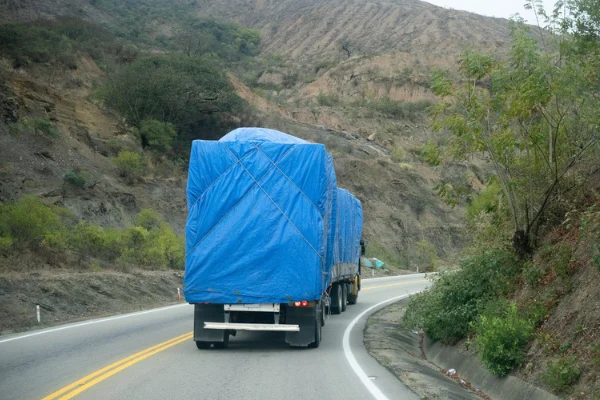
Matching the Tarpaulin to the Cargo
Cover selection starts with what is under it.
| Cargo Type | What the Cover Has to Do | Material Direction |
|---|---|---|
| AGG Aggregates, scrap, sand | Resist tearing and abrasion | Heavy PE, 200–300 GSM |
| PAL Palletised and packaged goods | Keep weather out, open fast | Medium PE, 120–180 GSM |
| GRN Grain, feed, fertiliser | Stay waterproof, hold UV stability | PE 180–250 GSM, UV-stabilised |
| STL Steel coil and timber | Resist abrasion and edge wear | PVC-coated fabric, reinforced corners |
| MCH Machinery and plant | Survive long outdoor exposure | PE 250–300 GSM, or PVC |
| HVL High-value or theft-sensitive | Conceal fully, leave no gaps | Opaque cover, close fixing |
Two Rules Sit Behind the Table
Cover weight should rise with how abrasive the load is, not with how large the vehicle is. And a cover that opens several times a day should be specified for handling, not for longevity alone.
PE or PVC for Transport Tarpaulins?
Choose by abrasion, chemical exposure and replacement cycle.
GENERAL WEATHER PROTECTION
60–300 GSM
PE Tarpaulin
Polyethylene is the cost-efficient choice for general weather protection. It is light, waterproof through its LDPE lamination, and available across 60–300 GSM. For most fleet duty, it is the right answer, and we will recommend it rather than upsell you.
- Weight & Cost
- Light to handle; cost-efficient per vehicle.
- Weather Protection
- Waterproof through LDPE lamination on both sides.
- Best For
- General fleet duty and most transport applications.
- Limit
- Not a substitute where edges are sharp or loads shift.
ABRASION & CHEMICAL EXPOSURE
450 GSM+
PVC Tarpaulin
PVC-coated fabric earns its cost in three situations: sustained abrasion from steel or aggregate, chemical or fuel exposure, and a replacement cycle where changing a cover costs more than the cover. If your loads run against the fabric, PE will chafe through and PVC will not.
- Weight & Cost
- Heavier to handle; higher initial material cost.
- Abrasion Resistance
- Withstands sustained abrasion from steel or aggregate.
- Best For
- Sharp edges, shifting loads and chemical exposure.
- Limit
- Over-specified for light weather protection alone.
Match the material to the load. PE is the right answer for most fleet duty; PVC earns its cost where loads run against the fabric or replacement cycles are expensive.
Read the Full PE vs PVC ComparisonWhere Covers Fail
Covers rarely fail from water. They fail from flapping. At highway speed, a loose cover works against its own fixings several times a second. The fabric fatigues at the fixing points, and the first thing to go is normally the hem or the eyelet, not the sheet.
Fixing Spacing
Fixing spacing matched to cover weight. Heavier covers need closer spacing, because each fixing point carries more fabric.
Second Restraint Line
A second restraint line at mid-height wherever the load sits above the sideboards. One line at the top edge lets the cover balloon and slap.
Rope-Reinforced Hems
Rope spreads load along the edge instead of concentrating it at each eyelet. This is what keeps the hem from failing first.
Finishing Options
Eyelet spacing, hem reinforcement and anti-flap fixing detail are confirmed with production before publishing as guidance.
Specify the fixing conditions. Share the tension, wind exposure and securing method. We will match the hems, eyelets and corner reinforcement to your fleet.
Eyelets & Hem FinishingVehicle Types and Transport Cover Formats
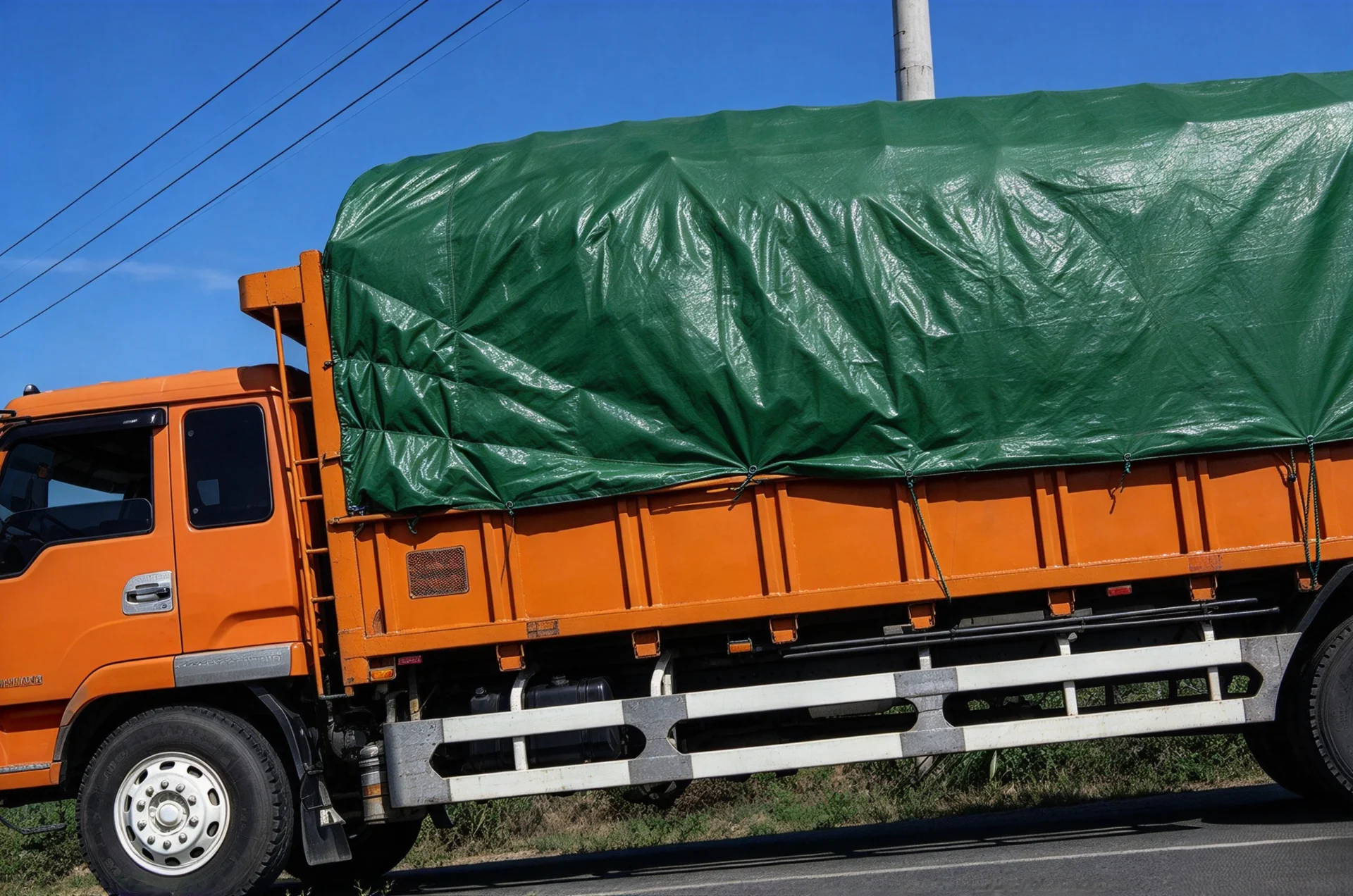
Covers are cut to your dimensions from your vehicle list, not adapted from a standard chart. Each vehicle type places different demands on the cover.
Flatbed & Drop-Side
Side accessFull-length cover with frequent access at the side. Fixing layout must allow quick opening on multi-drop routes.
Tipper & Bulk
AbrasionHeavy cover with abrasion from the load and rear tipping clearance. Cover weight rises with how abrasive the load is.
Curtainsider & Trailer
Long spansSide curtains rather than a sheet; certified systems are a different product class. Trailers have the longest spans, so seam and fixing layout matters most.
Skip, Hooklift & Yard
Dwell timeShort, heavy covers with rapid handling for skip and hooklift. Container and yard storage covers are long-dwell, where UV stability dominates.
Covers are cut to your dimensions from your vehicle list, not adapted from a standard chart.
Send your vehicle list. Share the vehicle types, load type and how often each cover is opened. We will recommend the cover format, fixing layout and material grade.
Explore Cover FormatsOrdering, Branding and Certification
Ordering against a vehicle list. Send the vehicle types and dimensions and we will return a cover schedule, so a replacement can be ordered by fleet number rather than by measurement.
-
Ordering Against a Vehicle List
Send vehicle types and dimensions; we return a cover schedule, so replacements are ordered by fleet number.
-
Branding
One setup fee covers the artwork; after that every cover in the fleet carries your livery at little marginal cost.
-
Cost per Vehicle-Year
Divide cover cost by the seasons it survives, then multiply by covers per vehicle. The cheaper cover is rarely the cheaper option.
- Cover Schedule
- Silk-Screen Printing
- Flexographic Printing
- Cost per Vehicle-Year
Silk-screen printing suits one- and two-colour logos, flexographic suits complex artwork. Certification matters, so we will be direct. Road haulage in some jurisdictions and cargo categories requires tarpaulins carrying XL marking, and certain covers are governed by standards such as EN 12641.
What We Can and Cannot Supply
TONGYUAN supplies factory-made PE and PVC covers.
- Factory-Made PE
- Yes
- Factory-Made PVC
- Yes
- Certified Curtainsider
- No
- Beverage-Transport Covers
- No
- Specialist System Supplier
- Refer
CUSTOMER FEEDBACK
What Our Customers Say
★★★★★
“The anti-flap fixing line at mid-height made a real difference on our tipper fleet. Covers that used to slap at highway speed now stay flat on the load.”
★★★★★
“We spec 250 GSM for our flatbeds and 120–180 GSM for palletised drops. The team helped us match cover weight to cargo instead of over-buying one grade.”
★★★★★
“Rope-reinforced hems and closer eyelet spacing stopped the hem tearing on our aggregate trailers. The fixing detail was confirmed before production.”
★★★★★
“Our curtainsider covers are a different product class, and they said so at inquiry rather than at inspection. That honesty saved us a failed order.”
★★★★★
“One setup fee covered our livery artwork, and now every cover in the fleet carries the brand. Printing cost per vehicle dropped sharply after the first run.”
★★★★★
“They sent a cover schedule keyed to our vehicle list. Replacements are now ordered by fleet number instead of by measurement, which cut ordering errors.”
★★★★★
“We compared cost per vehicle-year instead of cost per cover. The 250 GSM option that lasts three seasons beat the 120 GSM cover we used to replace annually.”
★★★★★
“The PVC-coated fabric handled steel coil abrasion where our PE covers chafed through. Reinforced corners and welded seams held up to daily loading.”
★★★★★
“UV-stabilised covers for our yard storage came with the batch test report. Long-dwell covers are holding their colour and coating through a full season.”
Swipe or drag to explore
01 / 09
FAQ
Frequently Asked
Frequently Asked
Questions About
Transport Tarpaulins
Find answers about GSM selection, load securing, eyelet spacing, service life and fleet branding.
Have Another Question?Share your vehicle types, load type and specifications with our export team.
What GSM tarpaulin do I need for a truck cover?
For daily use on exposed routes, 200–300 GSM PE with UV stabilisation is the usual specification. Lighter 120–180 GSM covers suit occasional or covered use. Where the load is abrasive, step up to PVC-coated fabric rather than to a higher PE weight.
How do you secure a tarpaulin on a truck at highway speed?
Three things: fixing spacing matched to cover weight, a rope-reinforced hem to spread load along the edge, and a second restraint line at mid-height wherever the load sits above the sideboards. The mid-height line is what stops the cover ballooning and slapping.
How many eyelets should a truck tarpaulin have?
Enough that no span between fixings is left unsupported for the cover’s weight. Heavier covers need closer spacing. Tell us the cover dimensions and the load and we will specify the spacing rather than quote a general rule.
How long does a truck tarpaulin last?
It depends on GSM, UV exposure and how often the cover is opened. A light cover on daily duty may last a season; a 250–300 GSM UV-stabilised cover on the same route can run several. Judge it on cost per vehicle-year rather than on a flat lifespan figure.
Can tarpaulins be printed with our company logo?
Yes. Printing runs up to four colours, on one or both sides, with a one-time setup fee. Once set up, adding the artwork to further covers in the fleet costs little per unit.
BUILT TO YOUR SPECIFICATION
Specify Transport Tarpaulins by Cargo, Not by Vehicle
A tarpaulin for transportation duty is chosen by what it carries. The vehicle sets the dimensions; the cargo sets the material, the weight and the fixing detail. Get that order wrong and you buy either a cover that fails early or one that costs more than the job needs.
START YOUR ENQUIRY
Discuss Fleet Requirements
Request a Free Sample
Send four details: vehicle types and dimensions, load type and how abrasive it is, how often each cover is opened, and destination port. We reply within one working day.