

What Tarpaulin Quality Control Means
Quality control is the evidence layer between a specification and a delivered container. A specification says what the tarp should be — 200 GSM, UV-stabilised, a given tensile in N/5cm. Quality control is what confirms it actually is that, and what documents that confirmation so you can defend the order internally.
MECHANICAL TESTS
Strength
Tensile and tear, quoted in N/5cm
MATERIAL TESTS
Composition
Weight in GSM and coating quality
Three Axes. Method Matters as Much as Result.
It runs on three axes: mechanical (tensile and tear), material (GSM and coating), and durability (UV resistance and, where specified, flame retardance). A number without a test method cannot be verified — which is why the method matters as much as the result. For a professional buyer, quality control is not a department; it is the thing you are actually paying for beyond the fabric itself.
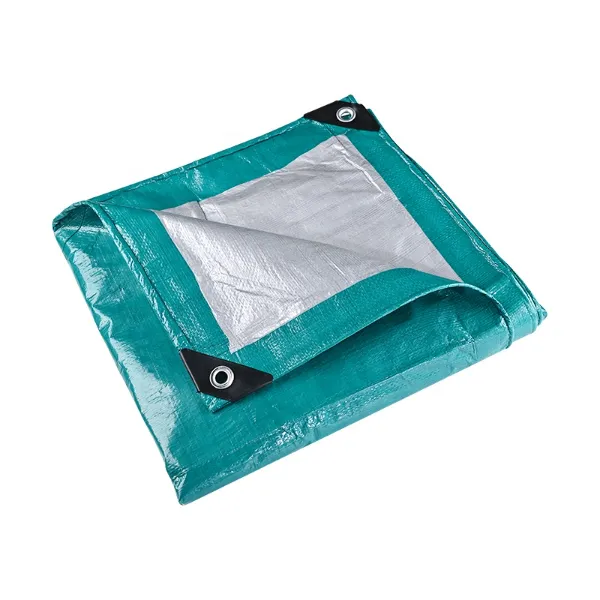
What We Test — and the Method Behind Each Number
The method is the part that makes a claim checkable.
| Property Tested | Method | What It Catches |
|---|---|---|
| TENSILE Tensile strength | ISO 13934-1 / ASTM D751 / ASTM D5034 | Fabric that tears under load or at the eyelets |
| TEAR Tear strength | ASTM D4533 | A tear that starts small and spreads |
| WEIGHT Weight (GSM) | ISO 3801 | The “thinner than specified” tarp |
| UV UV resistance | ASTM G53/94 (1,500 h) | A tarp that fails in one season of sun |
| FR Flame retardance (where specified) | ASTM D2863 / EN 13501-1 | A grade that will not pass the site requirement |
The Standard Set for Coated and Woven Fabrics
The four methods we cite most often — ASTM D751, ISO 13934-1, ASTM D5034 and ASTM D4533 — are the standard set for coated and woven fabrics. On specification-led orders, such as agency and relief supply, we test to the additional methods those specifications call for: ISO 1421-1 for tensile, ISO 4674 for tear, ISO 3801 for weight and ASTM G53/94 for UV.
The 26-Stage System, End to End
The system runs the full length of production, not just at the exit gate.
INCOMING & IN-LINE
2 STAGES
Early Stages
Checks start before the fabric exists — at raw material — and continue continuously as it moves through weaving and coating. This is where consistency is made.
- Incoming Material
- The raw HDPE or PVC compound, the yarn and the coating material are checked before they reach a line. A fault caught here costs minutes; the same fault caught after weaving costs a batch.
- In-Line Production
- Checks run continuously on GSM, tensile strength, UV performance and dimensional accuracy as the fabric moves through weaving and coating. The earlier a drift is caught, the smaller the run it affects.
- Why Early Matters
- Consistency is made here, not at the exit gate. Drift caught at incoming material is a minutes-level fix; the same drift caught at pre-shipment is a batch-level problem.
- Written Approval
- No production run proceeds without written approval of the sample — a gate that stops the second container from drifting from the first.
FINISHING & PRE-SHIPMENT
2 STAGES
Final Stages
Finishing is where most tarps fail first in the field — and pre-shipment inspection is the last gate before loading.
- Finishing
- Eyelets, hems, welding and reinforcement are checked against the order, because that is where most tarps fail first in the field.
- Pre-Shipment Inspection
- The finished goods are checked against the approved sample and the packing plan before loading. No production run proceeds without written approval of the sample.
- Why Finishing Fails First
- Fixing points take the concentrated load. If the eyelet spacing or hem reinforcement is wrong, the tarp tears at the fixing point long before the fabric itself fails.
- The Written Gate
- Sample approval in writing is the gate that stops the second container from drifting from the first — and pre-shipment inspection is the last chance to catch it before loading.
End to End. The 26-stage system runs from raw material to pre-shipment, not just at the exit gate — so the second container does not drift from the first.
Request Batch Test ReportWhat Should Be Inside a Batch Test Report
A batch test report is the document that makes a quality claim checkable. Ask for it before you ask for a discount.
Four Elements Per Property
A good report names the grade, the test method, the result, and the pass or fail against the specification — for each property, not as a single unqualified “passed”.
Ask Before the Discount
A supplier who can hand you a batch report for the grade you are buying is showing you the product is what it claims; a supplier who cannot is asking you to take the risk yourself.
Quoted by Grade, Not Blanket
We quote results by grade rather than as one blanket claim, and the report travels with the order — so the shipment and its evidence arrive together.
Not Sure How to Read One?
Send it to us and we will tell you what it does and does not prove. A report that omits the method cannot be verified, and we will say so.
Request the batch test report before the price. A supplier who can hand you the report for the grade you are buying is showing you the product is what it claims. Send it to us and we will tell you what it proves — and what it does not.
Request Batch Test ReportSample vs Bulk — The Consistency Problem
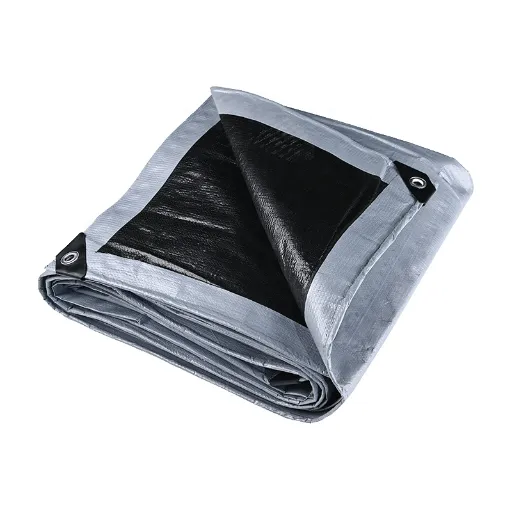
The buyer’s real risk is that the second container does not match the sample. The sample is easy to get right; the bulk order is where a factory either holds the grade or lets it drift.
Three Things Close the Gap
3 checksFirst, the sample is approved in writing before production starts, so there is a fixed reference to hold the run against. Second, in-line checks catch drift during production rather than after the container is packed. Third, pre-shipment inspection compares the finished goods to that approved reference before loading.
The Point of 26 Stages
Built-inConsistency is not a promise made at the end of the line, it is a sequence of checks built into the line itself. Each stage exists to stop the bulk order from drifting away from the sample that was approved.
*The sample is easy to get right. The bulk order is where consistency is either held or lost.
Consistency is a sequence, not a promise. Written sample approval, in-line drift checks and pre-shipment comparison against the approved reference are what close the gap between sample and bulk.
Request Batch Test ReportHow to Check a Tarpaulin Yourself on Arrival
You do not need a laboratory to catch a wrong container. Three checks take minutes and catch most failures.
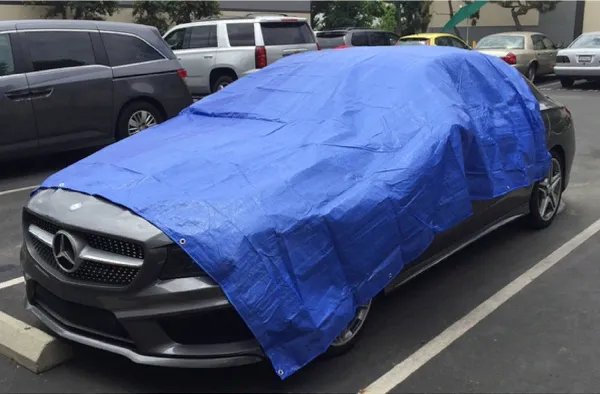
The Two-Leg Tear Test
Cut a sample, leave two “legs” to grip, and hang roughly a 10 kg weight from it for 30 seconds. If it breaks, the fabric is not the grade you approved.
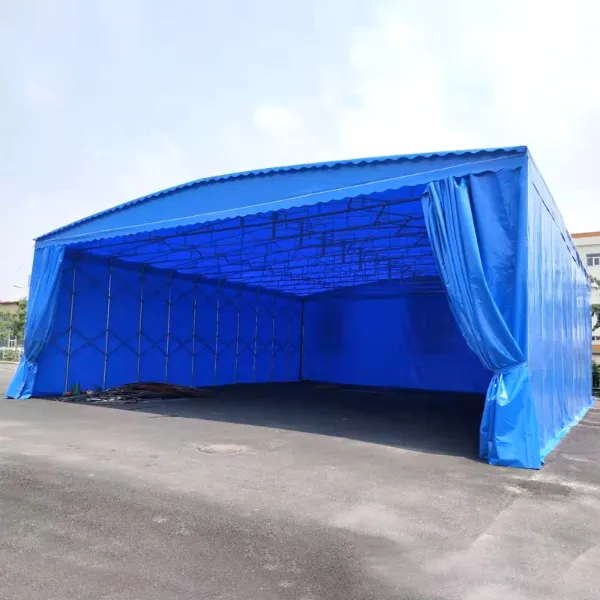
The Peel Test
Try to peel the coating from the base fabric. Coating that comes away in pieces larger than about 1 cm² has failed to laminate properly.
The GSM Spot-Check
Cut a known square, weigh it, and compare against the specification. This is the cheapest way to catch a tarp that arrived a grade lighter than ordered.
Count Eyelets & Bands
Count the eyelets and reinforcement bands against the order too — finishing failures are the easiest to spot and the most common cause of field complaints.
Third-Party Inspection (BV / SGS)
You do not have to take our word for the result. Third-party inspection through Bureau Veritas or SGS can be arranged on any order, at your option and your account, and it is welcome.
-
Mechanical
Tensile and tear, reported independently.
-
Material
GSM and coating quality, verified against the spec.
-
Durability
UV performance and, where specified, flame retardance.
- Mechanical
- Material
- Durability
- Independently Reported
Third-party inspection covers the same ground as our own checks — mechanical, material and durability — but reported independently, so you hold a document from a party with no stake in the shipment. It matters most on first orders and on high-value specification work, where the cost of a wrong container outweighs the inspection fee.
Independent Eyes on Your Order.
Add third-party inspection on any order, at your option.
- Inspection Agencies
- BV / SGS
- Scope
- Full Batch
- Coverage
- Mechanical · Material · Durability
- Reported By
- Independent Party
- Best For
- First Orders & High-Value Work
CUSTOMER FEEDBACK
What Our Customers Say
★★★★★
“The batch test report arrived before the price did. Tensile, tear and GSM were all quoted per ISO 13934-1 and ISO 3801, so our incoming inspection had a fixed reference to check against.”
★★★★★
“We ran the two-leg tear test on arrival and hung 10 kg from it for thirty seconds. It held. That is the first container we have received where the fabric matched the grade we approved.”
★★★★★
“The peel test caught nothing — the LDPE coating stayed bonded at the edges we checked. Coating quality matched the batch report line by line, which is what we ask for.”
★★★★★
“Pre-shipment inspection compared the finished goods against our approved sample before loading. That written gate is what stopped the second container from drifting from the first.”
★★★★★
“We asked for BV inspection on our first order. It covered mechanical, material and durability — the same ground as their own checks, but reported by a party with no stake in the shipment.”
★★★★★
“The GSM spot-check on a known square caught the one container that had drifted lighter. That single check paid for itself on the first shipment we tested.”
★★★★★
“In-line checks on UV retention were documented throughout the run. We did not have to take a promise at the end of the line — the drift was caught before the container was packed.”
★★★★★
“We sent them a batch report from another supplier that looked wrong. They told us exactly what it proved and what it did not. That honesty is why the next order went to them.”
★★★★★
“Eyelet count and reinforcement bands were checked against the order at finishing. That is the first time a supplier has caught a fixing-point error before we found it on site.”
Swipe or drag to explore
01 / 09
FAQ
Frequently Asked
Frequently Asked
Questions About
Quality Control & Testing
Find answers about test methods, batch reports, sample-to-bulk consistency and third-party inspection.
Have Another Question?Share your specification and destination port with our export team.
What is tarpaulin quality control?
Tarpaulin quality control is the documented sequence of checks — mechanical, material and durability — that confirms a shipped container matches the approved sample and specification. It covers tensile and tear strength, GSM, UV resistance and, where specified, flame retardance, each tested to a named method.
How is tarpaulin quality tested?
It is tested to recognised methods: tensile strength to ISO 13934-1, ASTM D751 or ASTM D5034; tear to ASTM D4533; weight to ISO 3801; and UV resistance to ASTM G53/94 after 1,500 hours of exposure. A batch test report records the method, the result and the pass or fail for each property.
What is a batch test report?
A batch test report is the document that records how a specific production batch tested against its specification, property by property, with the test method named. It is the evidence behind a quality claim, and a serious buyer asks for it before the price.
How do I know the second container will match the sample?
Because the sample is approved in writing before production, in-line checks hold the grade during the run, and pre-shipment inspection compares the finished goods to that approved reference before loading. Third-party BV/SGS inspection is available on any order if you want independent confirmation.
What is AQL in quality inspection?
AQL — Acceptable Quality Limit — is the sampling standard that sets how many pieces you check and how many defects you accept. Major defects are typically held to AQL 4.0 and minor defects to AQL 6.5, so a small number of checked pieces still gives a statistically meaningful read on the whole batch.
Can I arrange third-party inspection before shipping?
Yes. Inspection through Bureau Veritas or SGS can be arranged before loading on any order, at your option and your account, and it is welcome — especially on first orders and high-value specification work.
THE PROOF, NOT THE PROMISE
Specify Your Tarpaulin — With the Test Report to Back It
Tarpaulin quality control is the proof that separates a specification from a guess. It runs on three axes — mechanical, material and durability — each tested to a named method, each recorded in a batch report you can hold us to. The system is 26 stages long because the point is consistency: the second container matching the first, not just the sample being good.
Ask any supplier for the batch test report before the price. Ask for the method behind every number. And when the container arrives, run the two-leg tear test, the peel test and a GSM spot-check — the cheapest insurance you can buy.
START YOUR ENQUIRY
Request Batch Test Report
Arrange BV / SGS Inspection
Batch test report · Named method · Independent inspection