
How to Repair a Tarpaulin: PE, PVC & Canvas Methods
The method that repairs a tarpaulin depends on the material it is made from. Patch a PE tarpaulin with repair tape or a welded PE film patch; repair a PVC tarpaulin with vinyl cement or hot-air…
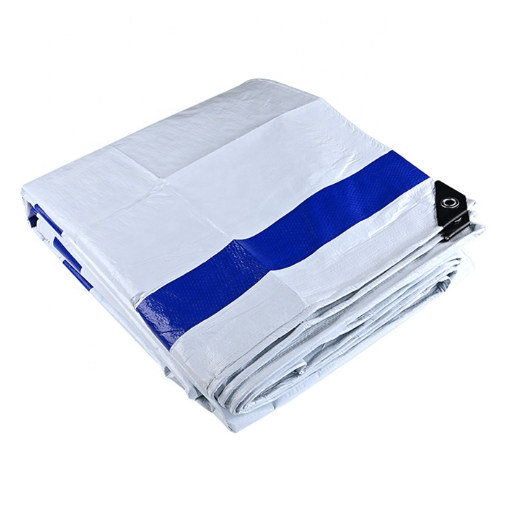
The method that repairs a tarpaulin depends on the material it is made from. Patch a PE tarpaulin with repair tape or a welded PE film patch; repair a PVC tarpaulin with vinyl cement or hot-air welding at 200–450 °C; repair a canvas tarpaulin by stitching. Clean and dry the surface first, and replace the cover when the fabric has gone brittle or chalky, because no patch will hold on sun-damaged material.
Rafael runs a transport fleet out of Rotterdam. Last month a 650 GSM PVC truck cover tore at an eyelet, and he had a simple choice: pay a workshop to weld it, or write off a cover with two years of life left in it. The weld took an afternoon and cost a fraction of a replacement. Six weeks on, the cover is back on the road. What decided the outcome was not the tear itself. It was knowing which repair belongs to which material, and doing the surface preparation before anything else.
You are right to want to fix rather than replace. A cover that fails early is usually a waste of the money you spent on it. This guide gives you the method for each material, the temperatures and dimensions that matter, and the honest point at which a patch stops making sense.
Match the Method to the Material
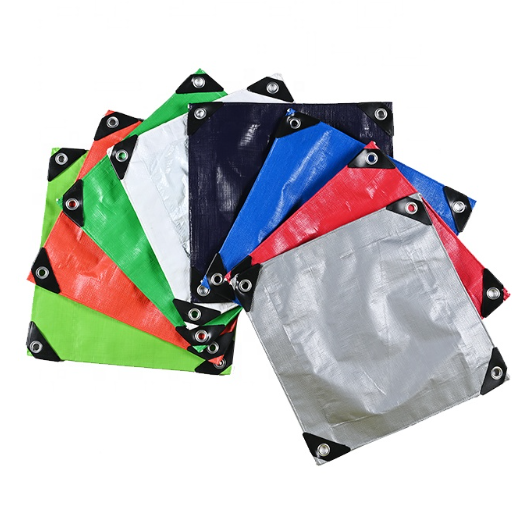
Most repair guides blur PE, PVC, and canvas into one set of steps. That is the mistake that turns a small tear into a scrapped cover. The three materials bond in different ways, and a method that works on one will fail on the others.
| Material | What bonds it | Repair method | Restored strength |
|---|---|---|---|
| PE tarpaulin | Nothing much, chemically | Repair tape or a welded PE film patch | Partial; waterproofing is never fully restored |
| PVC tarpaulin | Vinyl cement or heat | Cement patch or hot-air weld at 200–450 °C | 85–95% of original, on a good weld |
| Canvas tarpaulin | Thread | Stitched patch | High, if the patch overlaps sound fabric |
PE is the material buyers repair most often, because it is the one used for the most volume. It is also the hardest to bond. Polyethylene is chemically slippery, and the adhesives that hold vinyl or canvas will not grab it. That is why PE repair comes down to mechanical fastening, tape, or melting a PE patch into place.
PVC is the opposite. Because we manufacture it by high-frequency welding, the material is designed to fuse, and a hot-air weld on a repair bench behaves like the weld on the production line. That is what lets a PVC patch recover most of the original strength.
Canvas is its own case. It is a woven cotton or cotton-blend fabric, and the right tool is a needle and thread, not plastic adhesive.
Before any method, assess the damage. Check the size and type of tear, and check whether the base material is still sound. If the fabric cracks when you bend it, or leaves a chalky powder on your hand, stop. A patch needs sound fabric to anchor to, and sun-damaged material will not hold one.
How to Patch a PE Tarpaulin
PE tarpaulin runs from 60 to 300 GSM in our range, and it is the workhorse cover for hay, grain, equipment, and light truck loads. It is also the material that fails first at the fixing points, which is where most PE repairs start.
The cheapest repair is repair tape, but only for small punctures. Cut the tape so it extends 50–75 mm beyond the hole in every direction, and apply it to both sides of the cover. Press firmly from the centre outward so no air is trapped. Tape is waterproof, but it is a short-term fix: the adhesive breaks down under sustained sun, so plan to replace the patch, or the cover, within a season.
For a tear rather than a puncture, stitch first, then patch. Use a heavy needle and a strong thread, and sew a patch over the rip before sealing the stitching with tape or glue. The stitch carries the load; the tape keeps the water out.
For a larger hole, a welded PE film patch is the strongest option. PE melts at roughly 130–145 °C, and a heat gun with a piece of PE film can fuse a patch into the cover. It takes practice, and it is easy to overheat the material. Keep the gun moving, and test on an offcut before you work on the cover itself.
One honest limit: a repaired PE seam never fully recovers its waterproofing. The weld or tape seals the surface, but the structure underneath is compromised. If the cover has to stay waterproof under load, treat the repair as temporary and plan the replacement.
A farmer in Queensland put this to the test. A hay cover punctured by a fence post got a tape patch on both sides, pressed down hard, and it held through a dry season. The same cover, caught by a storm the following year, let water through at the patch line. The tape had done its job for a season, which is what tape is for.
If you are repairing PE covers regularly because the eyelets keep tearing out, the problem is not the repair method. It is the fixing. See eyelet and hem finishing for how rope-reinforced hems spread the load so the fabric does not tear in the first place.
How to Repair PVC Tarpaulin: Cement or Weld
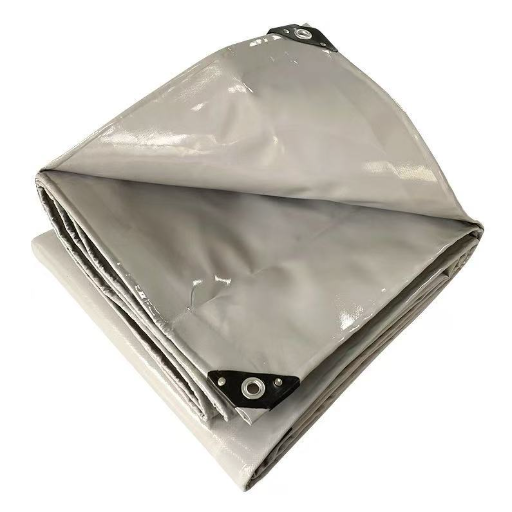
PVC tarpaulin is a polyester scrim coated with polyvinyl chloride, and it is the material for truck covers, tents, and industrial enclosures. Because it is weldable, it is also the material that repairs best.
There are two methods, and they suit different types of damage.
Vinyl cement is the field repair. Cut a PVC patch with rounded corners, extending 50–75 mm beyond the damage. Clean and dry both surfaces, then apply a thin coat of cement to each. Let it go tacky, which takes two to five minutes, then press the patch down from the centre outward and weight it for 24 hours while it cures. Cement is the right tool for a puncture or a short tear in a low-stress area.
Hot-air welding is the structural repair. It uses a heat gun running at 200–450 °C, depending on the grade, and a silicone pressure roller to fuse the patch into the cover. You preheat both surfaces until the PVC softens to a slight gloss, then roll the patch down at roughly a 45° angle. A good weld shows a small bead of PVC bleeding out along the seam, which is how you know the layers fused rather than just stuck. A weld restores around 85–95% of the original strength, which is why it is the method for load-bearing seams and truck covers.
Welding takes care, and two mistakes are common. Underheating leaves a weak bond that peels. Overheating scorches the PVC and means cutting an even larger patch. Test the temperature on an offcut first, and wear heat-resistant gloves with ventilation, because heated PVC releases fumes.
A contractor in Dubai faced this on a scaffolding enclosure. A wind gust tore a metre-long split in a 650 GSM PVC cover, and the cement option would have left a hard, inflexible seam in a spot that flexes every day. He welded it instead, running a PVC welding rod into the seam. The cover went back up the same week and held through the rest of the project.
High-frequency welding is what we use on the production line, and it is the same principle as hot-air welding, just faster and more even. For a repair, a hot-air tool is the practical version of that process. If you are replacing PVC covers rather than repairing them, see the PVC tarpaulin range, 300 GSM upward.
Repair the Fixing Points: Eyelets, Hems and Corners
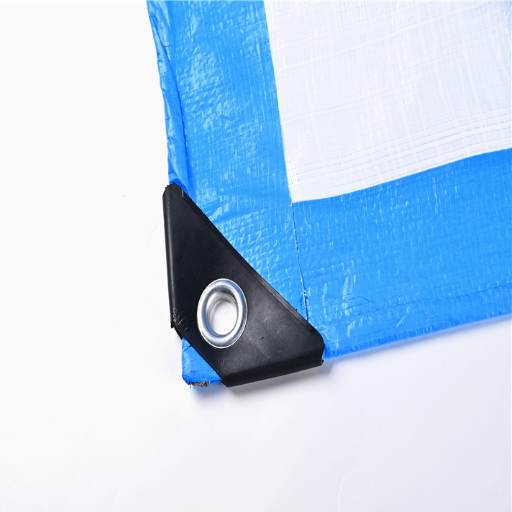
The fabric rarely fails first. The eyelet, the hem, and the corner do, because that is where the load concentrates. Most repair work is really fixing-point work.
When an eyelet tears out, do not just crimp a new one into the damaged hole. Repair the hem first. Patch or tape the torn area on both sides so the fabric can hold again, then punch a fresh hole and set a brass eyelet with an inner diameter of 10–12 mm, at least 12 mm back from the edge. An eyelet is only as strong as the fabric around it, so reinforcing the hem is the part that repairs last.
Hems and corners follow the same rule. A rope-reinforced hem spreads the pull along the edge instead of concentrating it at one point, and a corner patch does the same where the stress is highest. If the fixing points on your covers fail repeatedly, the finishing specification is the thing to change, not the patch.
For how to secure a cover so the fixing points are not overloaded in the first place, see our how to secure a tarpaulin guide. And when you are ready to specify eyelet spacing, hem reinforcement, and corner patches on a new cover, eyelet and hem finishing covers what can be ordered.
When to Replace a Tarpaulin Instead of Repairing It
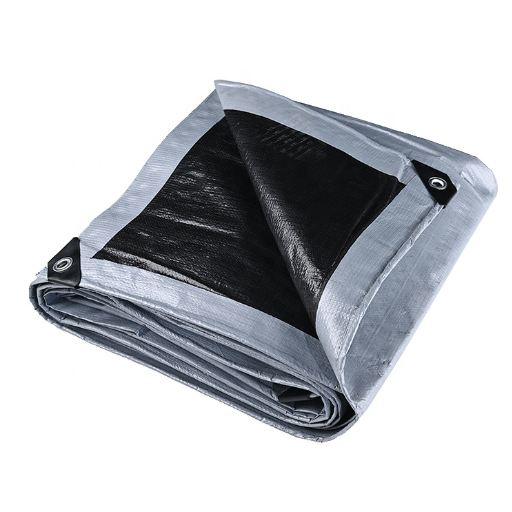
A manufacturer who tells you not to buy is unusual, but here it is: some covers are not worth patching. The fabric is the foundation of every repair, and when it has degraded, no method will hold.
| Sign | What it means | Verdict |
|---|---|---|
| Fabric is brittle, stiff, or chalky | UV has broken down the polymer | Replace |
| Tear area exceeds a third of the cover | Repair cost approaches replacement cost | Replace |
| Two or more tears longer than 30 cm | Structure is compromised across the cover | Replace |
| Five or more scattered holes | The cover has reached the end of its life | Replace |
| The same spot has failed twice | The base fabric cannot hold a patch | Replace |
| One clean puncture or short tear in sound fabric | Localised damage only | Repair |
The test is simple: bend the fabric. If it cracks instead of flexing, or if white powder rubs off on your hand, the coating has failed, and a patch will peel. That is the point where money spent on repair is money lost.
Elena, a distributor in Eastern Europe, learned this the slow way. She kept patching a batch of PE covers that had sat in a sun-exposed yard for two seasons. Each patch peeled within weeks, because the fabric underneath had gone chalky. The cost of the tape and the labour soon passed the price of a new 200 GSM cover. The honest fix was to replace the batch, and the next order went in with a UV-stabilisation specification so it would not happen again.
UV breakdown is the difference between a cover that can be repaired and one that cannot, and it is why the stabiliser package matters more than the GSM when you replace. When you do replace, send us the material, GSM, and expected service life, and we will recommend a grade. See the PE tarpaulin range, 60–300 GSM, for what each grade is specified to do.
Cleaning and Storage: Make the Repair Last
A repair is only as good as the care that follows it, and most cover failure is care failure in disguise.
To clean a tarpaulin, use mild soap and warm water with a soft brush. Shake off loose dirt first, then rinse thoroughly so no soap residue stays in the coating. Avoid bleach, harsh chemicals, and high-pressure washers, which break down the coating that gives the cover its waterproofing. Clean every three to six months in dusty or outdoor use, before dirt has a chance to work into the fabric.
To store a tarpaulin, dry it completely first. Even a little moisture in the folds grows mildew. Roll it rather than folding it, because folding along the same line every time creates a stress point that eventually cracks. Keep it in a cool, dry, ventilated place, away from direct sun, and off the ground. UV degrades even UV-stabilised covers, so shaded storage extends the life of anything you have repaired.
The loop closes here. A cover that is cleaned, dried, and stored well needs fewer repairs. A cover that is repaired and then left wet in the sun will fail again in the same place, and the second repair rarely holds as well as the first.
FAQ
How do I repair a hole in a tarpaulin?
Match the method to the material. Patch PE with repair tape on both sides or a welded PE film patch; repair PVC with vinyl cement or a hot-air weld at 200–450 °C; stitch canvas. Clean and dry the surface first, and cut the patch 50–75 mm larger than the hole.
Does tarpaulin repair tape actually work?
Yes, for small punctures in sound material. Tape is waterproof and holds through storms, but the adhesive breaks down under sustained sun, so treat it as a temporary fix and plan the replacement. Apply it to both sides and press from the centre outward.
Can PVC tarpaulin be repaired by welding?
Yes, and it is the strongest option. Hot-air welding at 200–450 °C fuses the patch into the cover and restores roughly 85–95% of the original strength. Test the temperature on an offcut first, because underheating gives a weak bond and overheating scorches the PVC.
How do I fix a torn eyelet or grommet?
Repair the hem first with tape or a patch on both sides, then punch a fresh hole and set a brass eyelet with a 10–12 mm inner diameter, at least 12 mm from the edge. The eyelet is only as strong as the fabric around it.
How should I clean and store a tarpaulin?
Clean with mild soap and warm water and a soft brush, and rinse fully. Dry it completely, then roll it and store it in a cool, dry, shaded place. Never store it damp, and avoid folding along the same line every time.
When should I replace a tarpaulin instead of repairing it?
Replace when the fabric is brittle or chalky, the tear area exceeds a third of the cover, you have two or more tears over 30 cm, or the same spot has failed twice. A patch will not hold on sun-damaged material.