
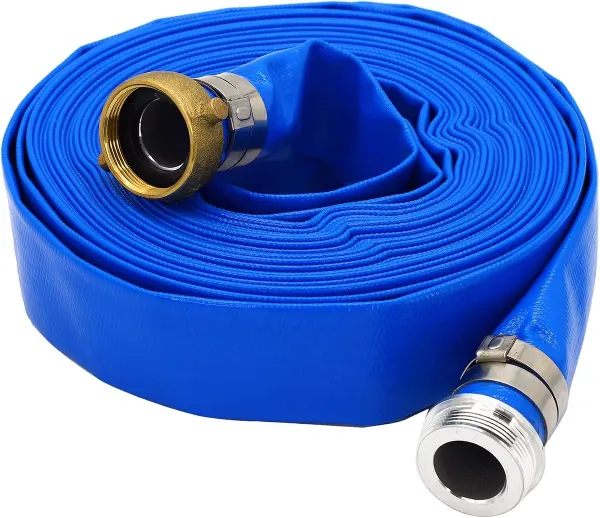
What Layflat Hose Is — and Is Not — For
Layflat hose is a transfer and discharge hose, and the honest limits matter as much as the strengths.
Two Limits to State Clearly
Not a Rigid-Pipe Substitute
It is not a substitute for rigid pipe on a permanent high-pressure main. A layflat hose is rated for its working pressure and moves water at that pressure; a buried or fixed main with sustained pressure is rigid-pipe territory.
Not a Suction Hose by Default
It is also a discharge hose, not a suction hose, unless a specific grade is rated for suction. If the pump is drawing water rather than pushing it, say so — the spec changes.
Where the application is agricultural transfer, drainage, dewatering or flood response inside the rated range, layflat is the practical choice — light to store, fast to deploy and easy to move.
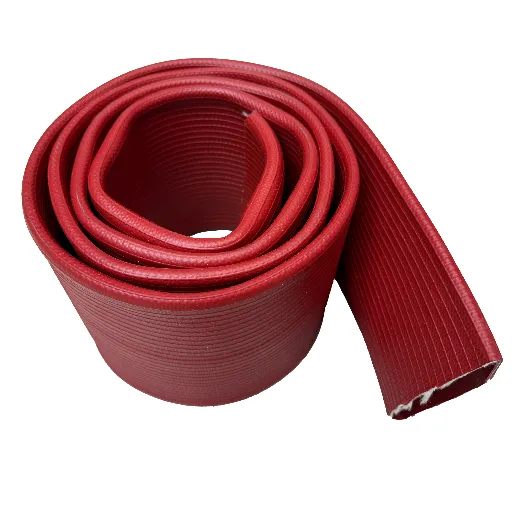
Layflat Hose Specifications: Diameter, Working and Burst Pressure
Material & Order Specifications
| Property | Specification |
|---|---|
| Material | PVC or TPU, extruded |
| Reinforcement | High-tenacity polyester knit |
| Diameter range | 1–16 inch (25–400 mm) |
| Working pressure | 2–10 bar, by grade |
| Burst pressure | ≈ 3× working pressure |
| Wall thickness | 1–3 mm, by diameter and duty |
| Roll lengths | 20 m, 50 m, 100 m standard |
| Colours | Standard colours; custom on request |
| Test methods | Burst-pressure batch test report on request |
| MOQ & lead time | Confirmed on enquiry · 15–25 days |
Verify batch consistency. Burst-pressure batch test reports help confirm your shipment matches the approved sample.
Duty Grades & Recommended Uses
| Duty | Working | Burst | Typical Use |
|---|---|---|---|
| Light duty | 2–4 bar | 6–15 bar | Seasonal irrigation, light water discharge |
| Medium duty | 6 bar | 18–21 bar | Farm irrigation, standard dewatering |
| Heavy duty | 8–10 bar | 24–30 bar | Construction dewatering, mining, flood control |
Working Pressure Is the Rating — Burst Is the Margin
Working pressure is the pressure the hose is designed to run at continuously. Burst pressure is the point at which it fails. For PVC layflat, burst is typically about three times working pressure — a 6 bar hose fails around 18 bar. The burst figure is a safety margin, not a rating to operate at.
6 bar working
~18 bar burst
10 bar working
~30 bar burst
Common diameters: 2, 3 and 4 inch are the irrigation workhorses; larger sizes serve dewatering and flood control.
PVC vs TPU Layflat Hose — Which Material?
Both materials do the same basic job: move water. They part ways on abrasion, cold and service life, and the choice is a cost decision more than a performance one.
PVC Layflat
Working pressure 2–10 bar. Moderate abrasion resistance. Stiffens below about 0°C. Outdoor life roughly 2–3 years. Limited chemical resistance. Lower cost — the right choice for seasonal, cost-sensitive work.
TPU Layflat
Higher working pressure (≈7 bar and up). Abrasion resistance 5–10× better. Flexible to about −40°C. Outdoor life 5–10 years. Handles oils, fuels and fertilisers. Lighter at equal burst. Higher upfront cost.
Where They Differ
Abrasion: TPU wins on gravel and rock. Cold: PVC stiffens at 0°C, TPU stays flexible to −40°C. Life: TPU lasts 2–3× longer outdoors. Chemicals: TPU handles fertiliser and fuel; PVC does not.
How to Choose
PVC for seasonal irrigation and light dewatering with no rough dragging. TPU when the hose gets dragged over gravel, run in freezing conditions, exposed to chemicals, or expected to last more than a couple of seasons.
Layflat Hose Applications
Practical water transfer and discharge for agriculture, construction and emergency response.
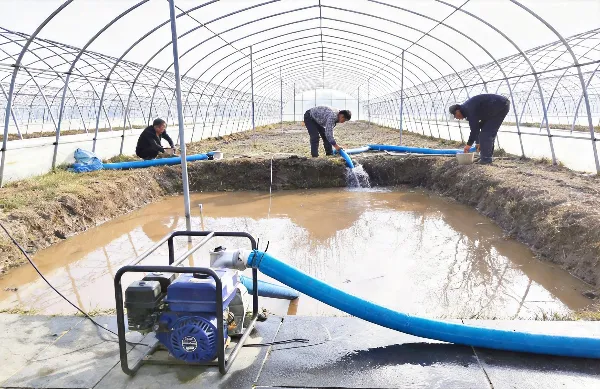
Agricultural Irrigation
2 to 6 inch hose for field and surface irrigation, sized to the pump and the run length. The 2, 3 and 4 inch sizes are the workhorses.
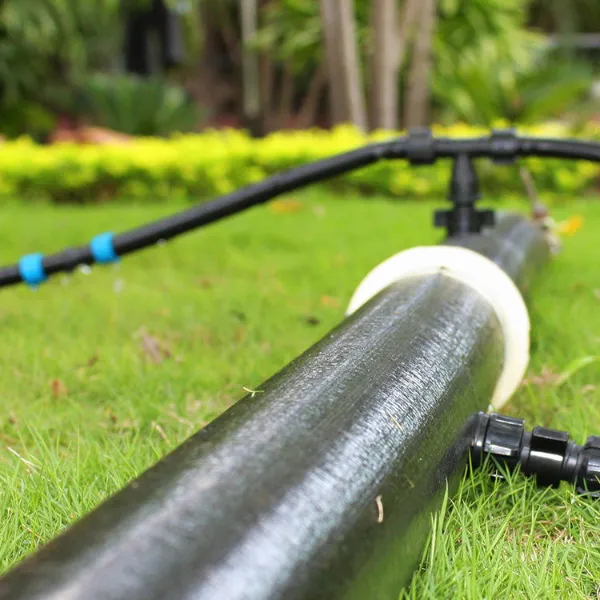
Dewatering & Mining
Heavy-duty grades move groundwater off construction sites. TPU grades are the choice where the hose is dragged over rough ground in quarries and mines.
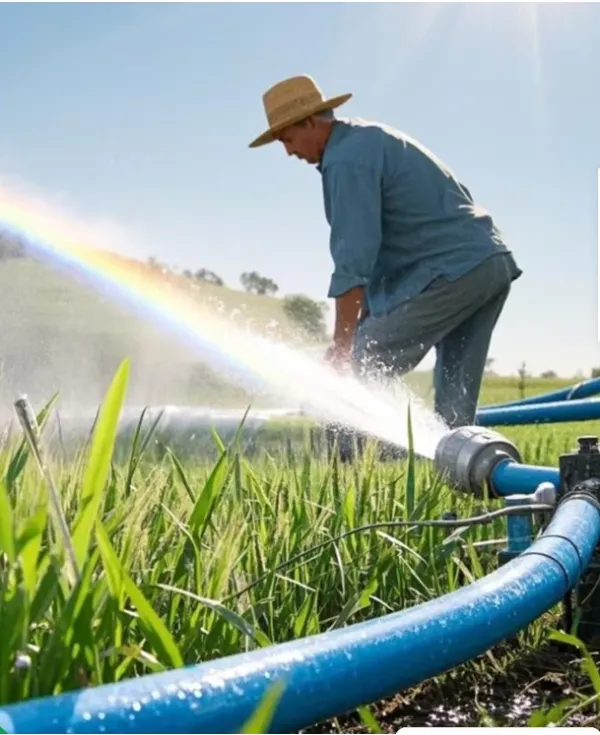
Flood Control & Firefighting
Large-diameter hose for fast, high-volume discharge. Firefighting supply hose is rated for the delivery pressure of the pump.
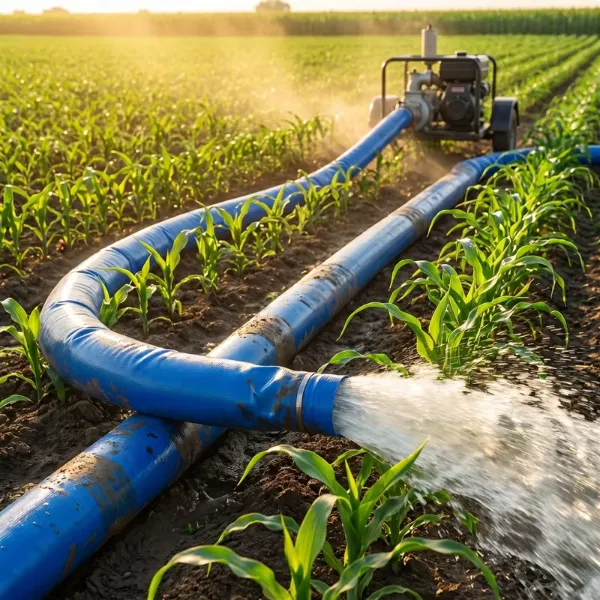
Aquaculture & Water Transfer
Low-pressure water movement between ponds and tanks, where flexibility and fast deployment matter more than high working pressure.
Discharge, not suction. Layflat hose is a discharge hose unless a specific grade is rated for suction. If the pump is drawing water rather than pushing it, say so — the spec changes.
Custom Layflat Hose and Fittings
Layflat hose is usually ordered to a specific diameter, pressure, colour and length, not picked from a shelf. We produce custom diameters and lengths, with your colour and, where the order calls for it, your brand printed on the hose.
Tell us the diameter, the working pressure, the material, the roll length and the destination port. We will come back with a specification, a sample plan and a landed-cost estimate, including export packing built for container loading.
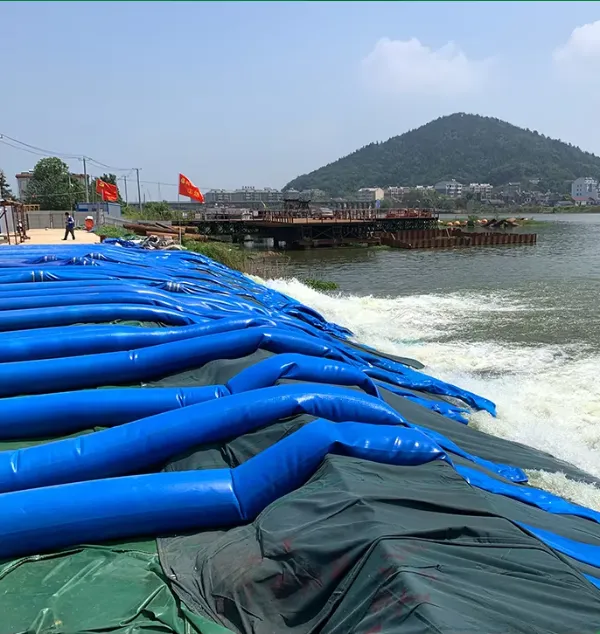
Quality Control and Batch Consistency
The buyer’s real risk with hose is the same as with any cover: that the second container does not match the sample, and that a burst-pressure figure on paper is not the hose that arrives. We run a 26-stage quality control system from incoming material to pre-shipment inspection, with in-line checks on wall thickness, diameter and pressure rating. Burst-pressure batch test reports are available on request, and third-party inspection through BV or SGS can be arranged.
Incoming Materials
Material checks before production begins, covering PVC and TPU compound and reinforcement.
In-Line Production
Monitor wall thickness, diameter and pressure rating throughout extrusion.
Pre-Shipment Inspection
Check finished batches before dispatch, including burst-pressure verification.
Key Checks
- Wall Thickness
- Diameter
- Working Pressure
- Burst Pressure
Documented batch results. Test reports identify the methods used. Independent BV or SGS inspection is available on request.
Sourcing From a Layflat Hose Manufacturer: What to Check
Compare suppliers by verified extrusion, documented pressure testing and direct technical support.
Request Burst-Pressure Test Reports
Ask for batch test results before negotiating price. Verify who performed the checks, rather than relying on a relayed pressure claim.
Verify the Extrusion Capacity
Check line count, floor area and monthly output. See the operation through a factory visit or live video walkthrough.
Confirm MOQ & Lead Time
Look for clear terms upfront. MOQ is negotiable on trial orders, with 15–25 days for production.
Speak to the Production Team
Specification questions reach the people who set our extrusion lines, so technical decisions come directly from production.
Direct Manufacturing. Direct Accountability.
We own our extrusion lines and can resolve batch problems directly, rather than simply quote a replacement.
- 2
- Owned Bases
- 4
- Extrusion Lines
- 6
- Finishing Lines
CUSTOMER FEEDBACK
What Our Customers Say
★★★★★
“The 6 bar PVC hose matched our pump output exactly. Working pressure was clearly stated on the test report, not just a burst figure.”
★★★★★
“We switched to TPU for our quarry dewatering. The abrasion resistance is a different league — no more leaks from dragging over gravel.”
★★★★★
“The 4 inch hose rolled out flat and coupled without kinking. Custom 50 metre lengths saved us cutting and waste on site.”
★★★★★
“Winter work at −20°C needed hose that stays flexible. The TPU grade performed where our old PVC cracked.”
★★★★★
“Burst-pressure batch reports were provided before shipment. That gave our engineering team the confidence to approve the order.”
★★★★★
“The 8 inch hose moved floodwater at the volume we needed. Custom colour made it easy to identify our own inventory.”
★★★★★
“We ordered 100 metre rolls for a fish farm transfer. Low-pressure movement between ponds worked exactly as specified.”
★★★★★
“The team confirmed our pump pressure and recommended the right grade. No overselling — just the hose that would do the job.”
★★★★★
“Brand printing on the hose and export packing were handled together. One contact made the import process straightforward.”
Swipe or drag to explore
01 / 09
FAQ
Frequently Asked Questions About Layflat Hose
Find answers about working pressure, material choice, sizing, cold weather and order requirements.
Have Another Question?Share your application and specifications with our export team.
What is a layflat hose used for?
Layflat hose is a flexible, flat-rolling discharge hose used to move water in irrigation, construction dewatering, mining, flood control, aquaculture and firefighting supply. It is designed for transfer and discharge, not for permanent high-pressure mains.
What is the difference between working pressure and burst pressure?
Working pressure is the pressure the hose runs at continuously. Burst pressure is where it fails — for PVC layflat, typically about three times working pressure. Select the hose on working pressure; treat burst pressure as a safety margin, not a rating.
Is TPU layflat hose better than PVC?
TPU is better on abrasion resistance, cold flexibility, chemical resistance and service life; PVC is better on upfront cost. For seasonal, low-abrasion irrigation, PVC is usually the economical choice. For mining, freezing conditions or long service life, TPU earns its higher price.
What size layflat hose do I need for irrigation?
Most field irrigation runs on 2, 3 or 4 inch hose. The right size depends on pump flow and run length — tell us the flow rate and the distance, and we will size the hose so it does not choke the pump.
Can layflat hose be used in cold weather?
PVC layflat stiffens below about 0°C and can crack, so it is not the choice for freezing conditions. TPU stays flexible to roughly −40°C. If the hose runs through a cold season, specify TPU.
What is the MOQ and lead time for layflat hose?
MOQ depends on the diameter and pressure grade, and trial-order terms are negotiable. Production lead time is 15–25 days from order confirmation, with sea freight through Qingdao or Shanghai under FOB, CIF or DDP terms.
BUILT TO YOUR SPECIFICATION
Specify Your Layflat Hose
Layflat hose is specified by three numbers — diameter, working pressure and material — and the order you get them right in matters. Select on working pressure, not burst; choose PVC or TPU by abrasion, cold and service life; and remember that a layflat hose is a transfer hose, not a rigid-pipe replacement.
Send us the diameter, the working pressure you run at, the material you are moving and your destination port. We will recommend the grade, send a sample and quote FOB Qingdao or CIF to your port — so you can check the wall and the coupling before you commit to the container.